You've noticed your air conditioner isn't quite keeping up — it's running longer than it used to, the air coming out doesn't feel as cold, or you've spotted ice on the outdoor unit on a mild day. A lot of Adelaide homeowners land on the same word from a quick search: "regas." But what a regas actually is, whether it's really what your system needs, and what a fair job involves gets muddled fast between different online sources.
Voltas Electrical & Airconditioning has been servicing and repairing air conditioners across Adelaide since 2010, holding licences BLD 274739 · PGE 265145 · AU 61210, with 24/7 emergency response and same-day appointments the norm through summer. This guide covers what a regas is, the genuine warning signs one is needed, realistic Adelaide pricing, how it differs from a standard service, and the legal reason it's not a job you can do yourself.
What Is an Air Conditioner Regas?
A regas — short for "recharge" — is the process of restoring an air conditioner's refrigerant gas to the correct level after it has dropped below the charge the manufacturer designed the system to run on. Refrigerant moves through a sealed loop between the indoor and outdoor units, absorbing heat from inside your home and releasing it outside; it isn't consumed like fuel and doesn't need "topping up" as a matter of routine.
That's the detail most competitor articles skip: a correctly installed, leak-free system that was gassed properly at install should never need a regas at all. If a technician is regassing your unit, refrigerant is escaping somewhere — through a pinhole in a copper joint, a worn valve seal, or a fitting that was never properly flared. A genuine regas job always includes checking for that leak; simply adding gas without finding the cause is a short-term fix that leaves you paying for the same job again within a year or two.
Warning Signs Your System Needs a Regas
Low refrigerant shows up as a specific set of symptoms rather than a single obvious fault. If you're seeing more than one of these together, it's worth booking an inspection before the compressor is put under unnecessary strain.
Warm or lukewarm air
The unit is running but the air coming from the vents isn't properly cold, even on the coldest setting.
Ice on the coil or outdoor unit
Ice forming on the indoor coil or the outdoor unit's pipework, even on a mild Adelaide day, is a classic low-refrigerant sign.
Hissing or bubbling noises
A hissing sound near the refrigerant lines or indoor unit can indicate gas escaping through a leak point.
Longer run times
The system takes noticeably longer to reach the set temperature, or never quite gets there and keeps cycling.
Rising energy bills
A low-refrigerant system works harder for the same result, which shows up as a jump in your power bill for similar usage.
Visible oil residue
An oily film around fittings or the outdoor unit's pipework often marks the exact spot refrigerant is escaping.
If any of this sounds familiar and your air conditioner has stopped cooling properly, our companion guide on why your air conditioner isn't cooling covers the other common causes worth ruling out alongside refrigerant levels.
Noticing warm air, ice on the unit, or a hissing sound? Get it checked before a small leak turns into a compressor repair.
Get a Same-Day QuoteHow Often Does an Air Conditioner Actually Need a Regas?
Ideally, never, or only once across a system's entire working life. Because refrigerant circulates in a closed loop, a healthy split or ducted system holds its factory charge for its whole service life — Adelaide systems can run 10-15+ years without ever needing refrigerant work. A regas is a repair for a specific fault, not a scheduled maintenance item like an air filter clean or a coil wash.
This is a genuinely useful distinction, because it's an area where thin or copy-pasted content online tends to get it backwards, implying a regas belongs on a routine service checklist. If a system needs regassing every one to two years, that repeat pattern is the real signal — it means there's a leak that hasn't been found and fixed yet, and continuing to top up the gas without repairing the leak just delays a proper fix (and adds to the running cost each time).
Regas vs a Standard Service — What's the Difference?
A standard air conditioner maintenance visit is preventative: cleaning filters and coils, checking electrical connections, clearing condensate drains, and confirming the system is running efficiently. It's scheduled on a calendar, usually once or twice a year before the Adelaide summer and winter peaks, regardless of whether anything is currently wrong.
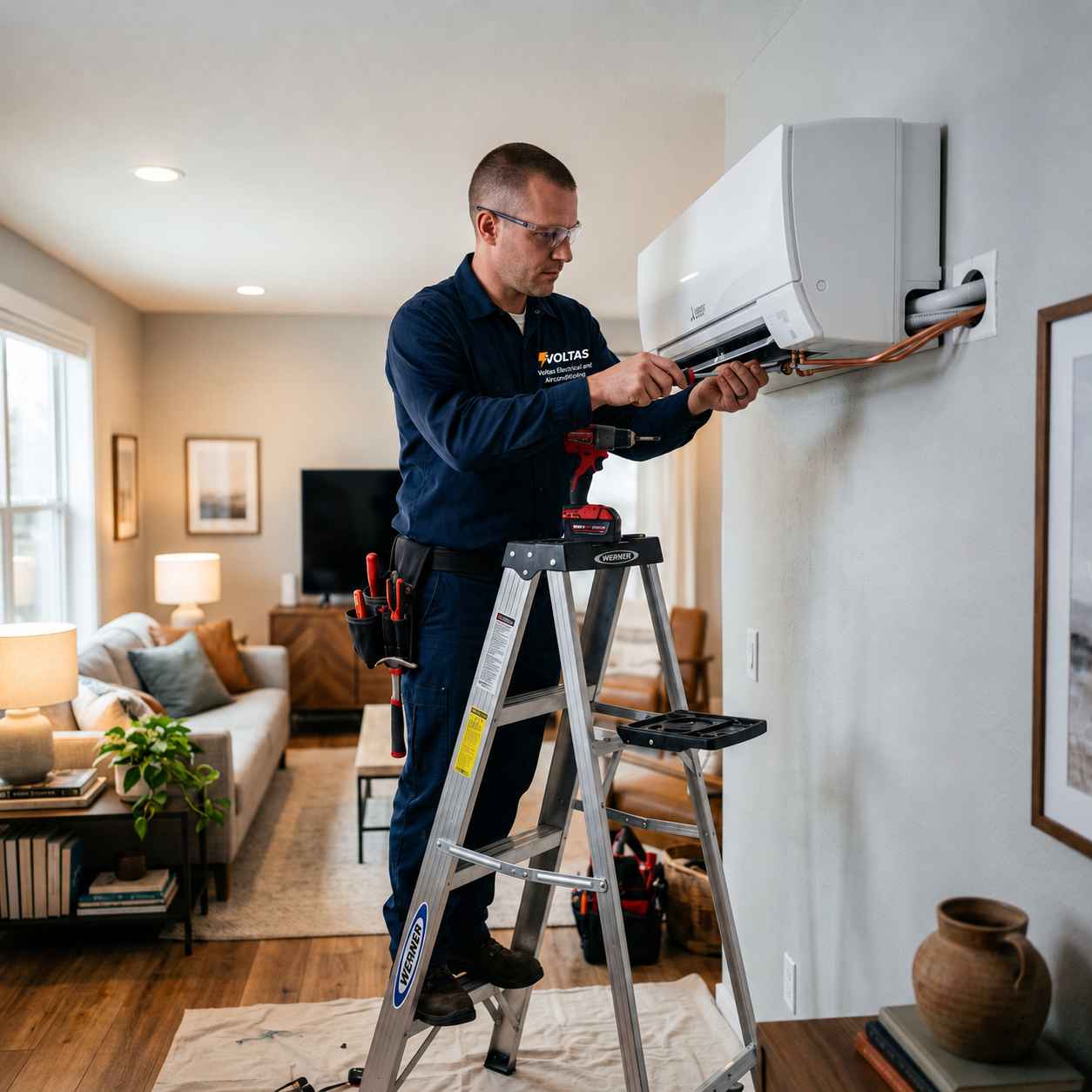
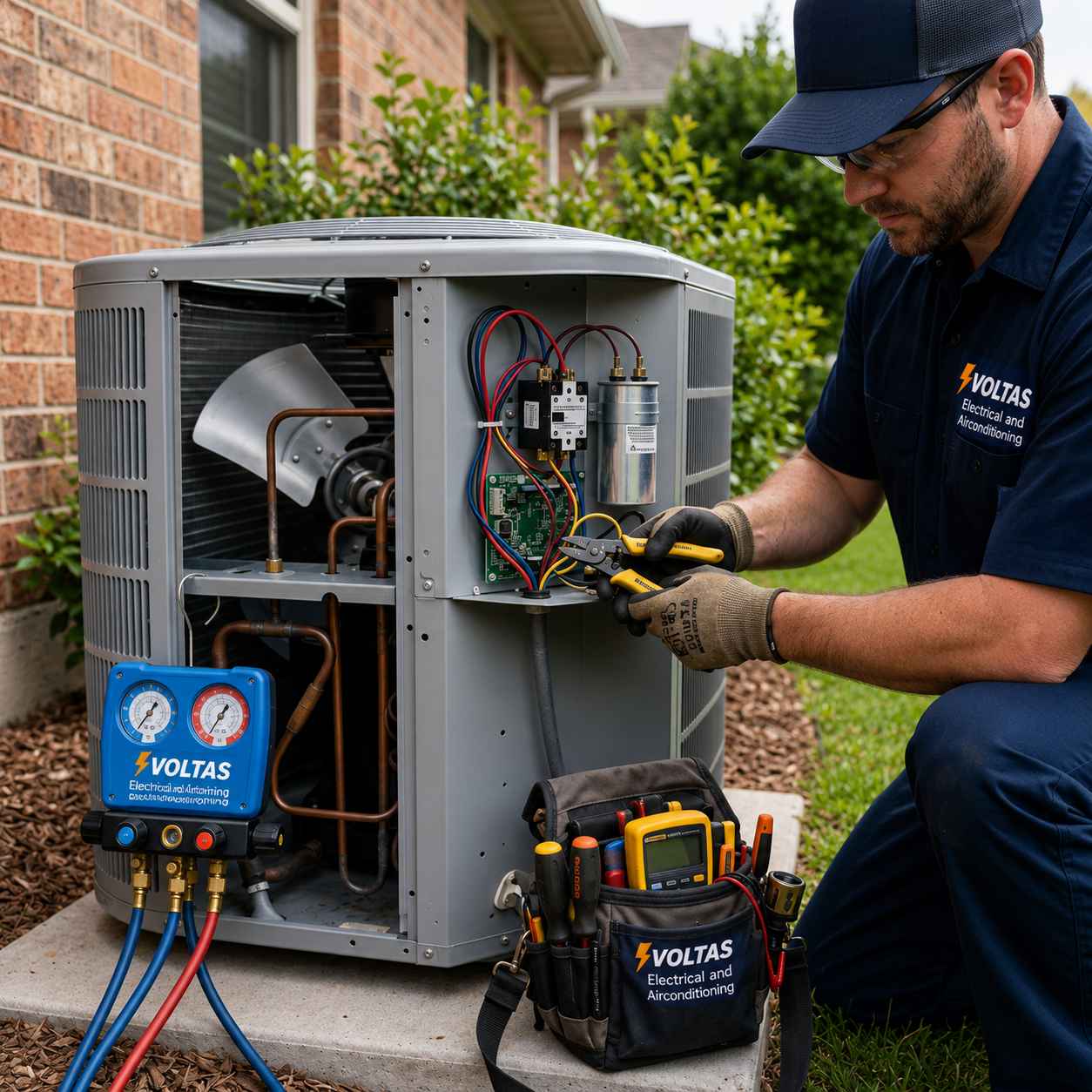
A regas is corrective — it only happens because refrigerant has actually dropped below spec, almost always due to a leak. A thorough regas job includes: connecting gauges to check the current refrigerant pressure against the system's specification, using a leak detector (or an ultraviolet dye method) to pinpoint where gas is escaping, repairing that leak point, evacuating the system to remove air and moisture, and recharging it to the exact factory-specified refrigerant weight before testing performance. Anyone offering to "just add gas" without checking for a leak first isn't doing the job properly.
What a Regas Costs in Adelaide, and Why It's a Licensed-Only Job
As a general Adelaide guide, a straightforward split-system regas typically sits somewhere in the range of $150 to $400 in 2026, while a ducted system — which holds a much larger refrigerant charge and takes longer to evacuate and recharge — usually costs more. These figures are indicative only: the refrigerant type (R32 and R410A are the most common in newer Australian systems), how much gas the unit needs, panel or roof-space access, and whether a hidden leak needs tracing all affect the final price. Treat any figure quoted online, including this one, as a starting point for a conversation with a licensed technician, not a fixed price for your specific unit.
There's also a legal reason you can't simply buy a refrigerant bottle and do this yourself: refrigerants used in air conditioning are synthetic greenhouse gases regulated under Commonwealth ozone protection law, and handling them — acquiring, using, or disposing of refrigerant gas in air conditioning and refrigeration equipment — legally requires an ARCtick refrigerant handling licence, overseen by the Clean Energy Regulator. This isn't red tape for its own sake: refrigerant is a controlled substance because of its environmental impact if vented improperly, and a licensed technician has the recovery equipment to handle it safely and legally, along with the training to diagnose the actual leak rather than masking it with a temporary top-up.
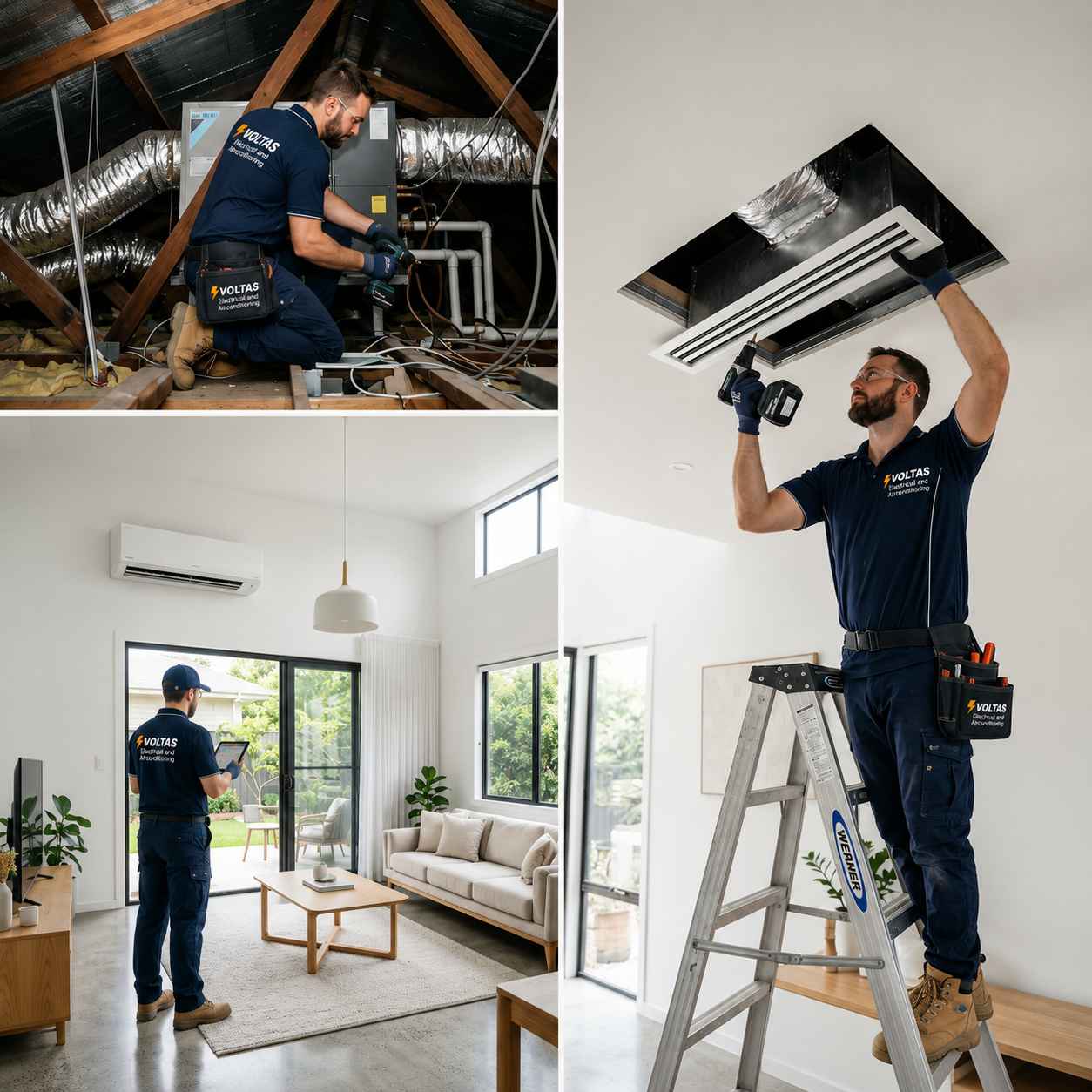
Every regas Voltas carries out is completed by a fully licensed technician, on the brands we regularly service across Adelaide — including Daikin, Mitsubishi Electric, Fujitsu General, Panasonic, LG, and the other major brands found in most local homes — with the leak-finding step built in as standard, not treated as an optional extra.
We see this pattern often in established Adelaide suburbs with older split systems — properties around Mawson Lakes and Tea Tree Gully, for example, where units installed a decade or more ago are reaching the age where refrigerant line joints and valve seals are more likely to develop slow leaks. If your system is in that age bracket and showing any of the warning signs above, it's worth getting ahead of it before peak summer demand.
If it turns out the issue isn't refrigerant-related at all, our guide to signs your air conditioner needs repair runs through the other faults that commonly get mistaken for a low-refrigerant system, and our team can diagnose the actual cause during the same repair visit.
Frequently Asked Questions
What is an air conditioner regas?
A regas (short for recharge) is the process of restoring an air conditioner's refrigerant to its correct level after it has leaked or dropped below the amount the system was designed to run on. Refrigerant is a sealed, closed-loop gas that doesn't get "used up" during normal operation, so a system needing regular regassing almost always has a leak somewhere that should be found and repaired first, not just topped up repeatedly.
How much does an air conditioner regas cost in Adelaide?
A straightforward split-system regas in Adelaide typically runs somewhere in the vicinity of $150 to $400, depending on refrigerant type and how much gas the system needs, while a ducted system can cost more given the larger refrigerant charge. These are indicative ranges only — leak detection, panel access, and the age of the unit can all move the final price, so a licensed technician needs to inspect the specific system for an accurate figure.
How often does an air conditioner need a regas?
A properly installed, leak-free air conditioner should never need a routine regas — refrigerant circulates in a sealed system and doesn't deplete on its own. If a unit needs regassing every year or two, that's a sign of a slow leak that needs locating and repairing, not a maintenance task to schedule on a fixed interval like a filter clean.
Can I regas my own air conditioner in Australia?
No. Handling refrigerant gas in Australia legally requires an ARCtick refrigerant handling licence issued under the Commonwealth's ozone protection and synthetic greenhouse gas laws, administered by the Clean Energy Regulator. It isn't a DIY task — it needs a licensed, ARCtick-certified refrigeration technician with the right recovery and charging equipment.
What are the warning signs my air conditioner needs a regas?
The main signs are weaker or warm airflow instead of cold air, ice forming on the indoor coil or outdoor unit, a hissing or bubbling sound from the refrigerant lines, longer running times to reach the set temperature, and a noticeable jump in energy bills for the same usage. Any one of these on its own is worth a proper inspection before it develops into a bigger repair.
Think Your System Needs a Regas?
Our licensed technicians will find the real cause — not just top up the gas — with same-day appointments available across Adelaide.
Sources referenced include the Clean Energy Regulator's refrigerant handling licence requirements (cleanenergyregulator.gov.au) for the ARCtick licensing information above, alongside Voltas' own trade experience servicing refrigerant systems across Adelaide.
Disclaimer: This article is provided as general information and guidance only. It draws on publicly available sources, government and industry publications (referenced where relevant), and Voltas Electrical Adelaide's own trade experience — it is not personalised advice for your specific property and does not replace a licensed, on-site assessment. Regulations, pricing, and product or brand details can change over time, so please independently verify anything relevant to your decision and seek your own professional advice before acting. To the fullest extent permitted by law, Voltas Electrical Adelaide accepts no responsibility or liability for any loss, damage, or other outcome arising from reliance on the information in this article. Where this article refers to a same-day or obligation-free quote or assessment, that refers to the quote or assessment itself — a site visit to a property well outside our normal Adelaide metro service area may incur a travel or call-out fee, as set out in our Terms & Conditions, which also has full details on the points above.