Adelaide homeowners adding air conditioning to more than one room almost always hit the same fork in the road: fit a separate single split system to each room, or run one multi-split system with several indoor heads off a single outdoor unit? Both cool a home perfectly well — the right answer comes down to how many rooms you're conditioning, how much outdoor wall or ground space you actually have, your budget, and whether you want the flexibility to add more rooms later without redoing the whole system.
We're Voltas Electrical & Airconditioning (licences BLD 274739 · PGE 265145 · AU 61210), and this exact decision comes up on quotes across Adelaide every week — from a single bedroom retrofit in a 1960s bungalow to a four-zone job in a newer build with a tight side-return for the outdoor unit. Here's how we actually walk clients through it, including genuine current Adelaide pricing context rather than a generic online calculator's numbers.
Single Split vs Multi-Split: What Each Actually Is
A single split system is the simplest configuration: one outdoor condenser unit paired with exactly one indoor wall-mounted head, cooling and heating a single room or open-plan zone. If you want three rooms conditioned this way, you install three complete, independent systems — three outdoor units, three indoor heads, each running on its own compressor.
A multi-split system uses one larger outdoor condenser unit connected via refrigerant piping to two, three, four, or occasionally five separate indoor heads, each in a different room. Every indoor head still has its own remote or wall controller and can be set to a different temperature (within reason) or switched off independently — but they all draw on the same shared outdoor compressor.
Not sure which setup fits your floor plan? We'll walk your property and give you an honest recommendation, not just whichever system is easiest to sell.
Get a Same-Day QuoteCost and Efficiency: What the Numbers Actually Show
Adelaide pricing for a single, straightforward split system air conditioning installation generally lands somewhere between roughly $2,500 and $5,500 fully installed, depending on capacity, brand, and how much pipe and cable run the job needs — Adelaide's smaller licensed-installer pool and older housing stock (longer wall penetrations, tighter roof access) tend to sit that range slightly above what you'd see quoted in some eastern-states cities. That's a realistic ballpark, not a fixed price — every property is different, which is exactly why we quote after an on-site look rather than off a phone call.
Multi-split systems don't scale down neatly per room compared with that. A 2-head multi-split commonly runs somewhere around $3,500-$5,500 installed, a 3-head unit roughly $4,500-$7,000, and each additional indoor head typically adds in the order of $1,000-$1,500 once you're past the first two. In practice, that means a 2-3 room multi-split is often similar in total cost to fitting the same number of separate single splits — sometimes a little more, because the outdoor condenser and refrigerant circuit have to be sized for the combined load of every head running at once. The genuine saving with multi-split isn't always cash on day one; it's a single outdoor unit taking up one spot on the wall or in the side yard instead of two, three, or four.
On running efficiency, the honest picture is "it depends on how you actually use it." Every reverse-cycle system sold in Australia — single split or multi-split — now carries a Zoned Energy Rating Label (ZERL) star rating specific to your climate zone, and a high-star multi-split and a high-star single split of the same capacity use broadly comparable energy per kilowatt of output. Where multi-split can lose ground is under simultaneous full load: if every indoor head is running flat-out on a 40°C Adelaide afternoon, they're all drawing on one shared compressor, so the system's effective output per room can sit a little below what four fully independent single splits would deliver in the same conditions. If your household typically only runs one or two rooms hard at a time (a common pattern), a multi-split performs efficiently in practice. If you routinely want every room cold at once, separate single splits give each room its own dedicated compressor with no shared-load compromise.
Which Homes Actually Suit Which System
In practice, the deciding factor is rarely "which is technically superior" — it's the property itself.
Multiple rooms, one usable outdoor spot
Narrow side-returns, strata or council restrictions on visible outdoor units, or a single external wall that actually makes sense for plant equipment — a multi-split lets you condition 3-4 rooms from that one location instead of needing several.
Whole-of-house comfort in one go
If you already know you want most or all bedrooms plus a living zone conditioned, and you're doing it as a single project, a multi-split is often the more coherent, tidier install — one outdoor unit, one electrical circuit to plan for.
One or two priority rooms right now
Cooling just the main bedroom, or a bedroom and a living area, rarely justifies the extra cost and complexity of a multi-split — a single split (or two independent single splits) is simpler, cheaper per room, and easier to size correctly for each specific space.
Staged budget, adding rooms over time
Planning to do the living room this year and bedrooms next year or the year after? Independent single splits let you add a system whenever budget allows without touching what's already installed — a multi-split's outdoor unit is generally sized and committed to a set number of heads from day one.
Renting out rooms or multi-generational living
Where different occupants want full independent control — including being able to turn their unit off completely without affecting anyone else's cooling — separate single splits avoid any shared-compressor trade-off entirely.
Wanting fault isolation
If the outdoor compressor on a multi-split fails, every connected room loses conditioning at once. With independent single splits, a fault in one system never touches the others — worth weighing if you can't be without cooling in any room during our hotter months.
Installation and Maintenance: What's Actually Different Day to Day
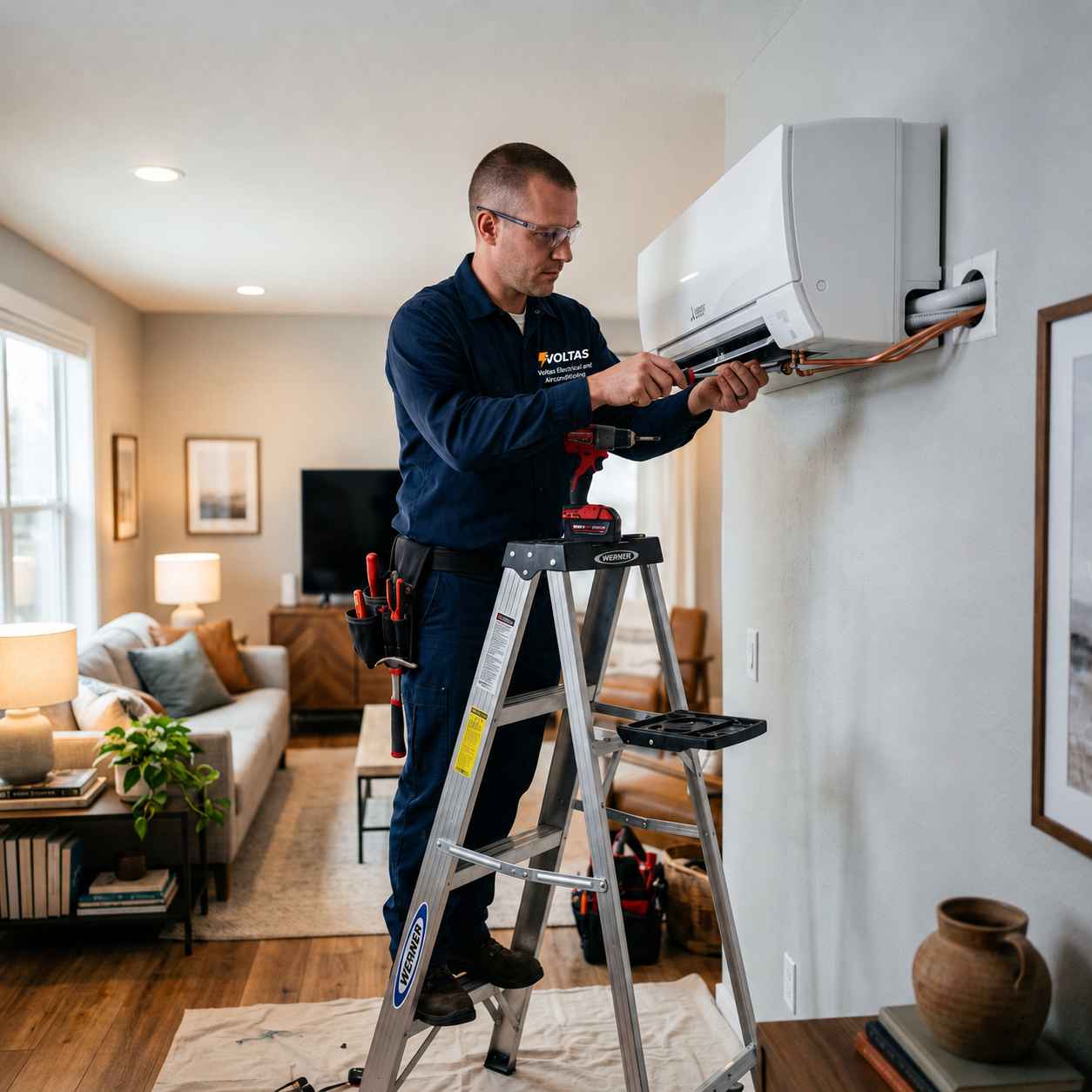
A single split installation is the most straightforward job we do: one indoor head, one short-to-medium refrigerant line set, one outdoor unit, typically a few hours from start to finish for a standard back-to-back position. Servicing is equally simple — filters, coil clean, gas pressure check, one system at a time, and if something needs attention it's isolated to that one room.
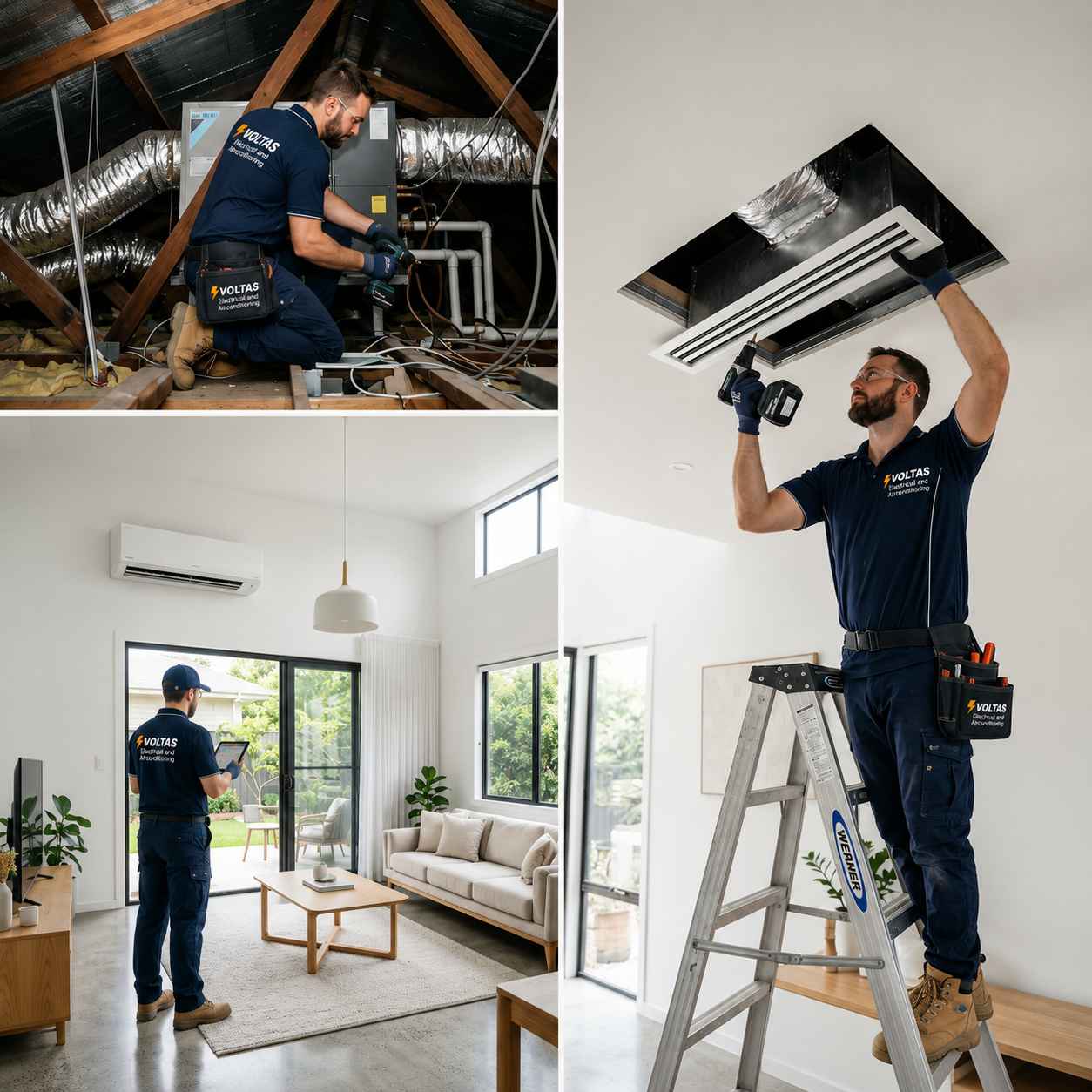
A multi-split installation takes longer and needs more upfront planning, because every indoor head's refrigerant line has to be run back to the same outdoor unit — sometimes through ceiling space or wall cavities across multiple rooms, which is where older Adelaide homes (solid brick, low roof clearance, no existing service cavities) can add real labour time compared with a project home. The outdoor unit itself is physically larger and heavier than a single-split condenser of similar total capacity, so mounting location and structural support matter more. On the maintenance side, an annual service on a multi-split covers multiple indoor heads and one larger compressor in a single visit — often more time-efficient overall than servicing three or four completely separate single-split systems on different days, even though the per-visit job is longer.
Either way, correct sizing matters as much as the split-vs-multi decision itself — see our guide on what size split system you actually need for how we work out capacity per room, since undersizing any individual head (single or multi) is the single most common cause of a system that "should be enough" but isn't.
Ducted Is the Third Option Worth Knowing About
If you're seriously considering a 4-5 room multi-split, it's worth at least comparing it against ducted air conditioning, which conditions the whole home through one central unit and ceiling vents rather than visible wall-mounted heads in every room. We've covered that trade-off in detail in split system vs ducted air conditioning and ducted vs split running costs — for most 2-3 room jobs, multi-split or independent single splits remain the more cost-effective route, but once you're past four or five zones, ducted starts to close the cost gap while adding whole-home zoning control.
Whichever direction you're leaning, we install and service every major brand in this comparison — Daikin, Mitsubishi Electric, Fujitsu General, Panasonic, LG, and 15 other trusted manufacturers — so the recommendation you get is based on your home and budget, not which brand we're trying to move. It's a decision we help residents in suburbs like Norwood, Burnside, and Golden Grove work through regularly — from tight-block character homes with almost no spare outdoor wall, to newer builds where a 4-head multi-split off one discreet condenser makes the whole install noticeably tidier.
A single split system pairs one outdoor condenser with one indoor head, cooling or heating one room or zone. A multi-split system connects one larger outdoor condenser to two or more indoor heads (typically 2-5), so several rooms are conditioned from a single outdoor unit, each with its own thermostat and on/off control. Not usually. A single outdoor unit and larger compressor cost more upfront than one small single-split condenser, so a 2-3 head multi-split is often similar to or slightly more expensive than fitting the same number of independent single splits, though it saves outdoor wall and ground space and can simplify the install where only one outdoor location is practical. It depends on how it's used. A well-designed multi-split runs efficiently if you're mainly cooling one or two zones at a time, but running every indoor head at full capacity simultaneously can push the shared compressor closer to its limit and reduce the effective output per room compared with fully independent single-split systems. Generally only that indoor head is affected — the other zones on the same outdoor unit usually keep running. However, if the shared outdoor compressor itself fails, every indoor head connected to it loses cooling and heating at once, which is the key redundancy trade-off against separate single-split systems. We'll assess your rooms, your outdoor space, and your budget on-site and recommend whichever setup genuinely suits your property — same-day appointments available, 24/7 for emergencies.Frequently Asked Questions
What's the actual difference between a multi-split and a single split system?
Is a multi-split system cheaper than installing several single splits?
Is a multi-split system less efficient than single splits?
What happens if one indoor head on a multi-split system breaks down?
Get the Right System for Your Home, Not Just Any System
Sources referenced for pricing and efficiency context include published 2026 Adelaide/Australia air conditioning installation cost guides and Australia's Zoned Energy Rating Label (ZERL) program documentation. Pricing is general market guidance current at time of writing and can shift with brand, capacity, and property access — always confirm with an on-site, obligation-free quote.
Disclaimer: This article is provided as general information and guidance only. It draws on publicly available sources, government and industry publications (referenced where relevant), and Voltas Electrical Adelaide's own trade experience — it is not personalised advice for your specific property and does not replace a licensed, on-site assessment. Regulations, pricing, and product or brand details can change over time, so please independently verify anything relevant to your decision and seek your own professional advice before acting. To the fullest extent permitted by law, Voltas Electrical Adelaide accepts no responsibility or liability for any loss, damage, or other outcome arising from reliance on the information in this article. Where this article refers to a same-day or obligation-free quote or assessment, that refers to the quote or assessment itself — a site visit to a property well outside our normal Adelaide metro service area may incur a travel or call-out fee, as set out in our Terms & Conditions, which also has full details on the points above.