The air conditioner going into an Adelaide home this spring is a genuinely different piece of equipment to the one installed even five or six years ago — different refrigerant, different efficiency baseline, often different controls entirely. Most homeowners never think about any of this until they're already comparing quotes, at which point the terminology (R32, GEMS ratings, VRF) shows up with zero context. This is that context, focused on what's actually changing and why it matters for a real decision on your own home.
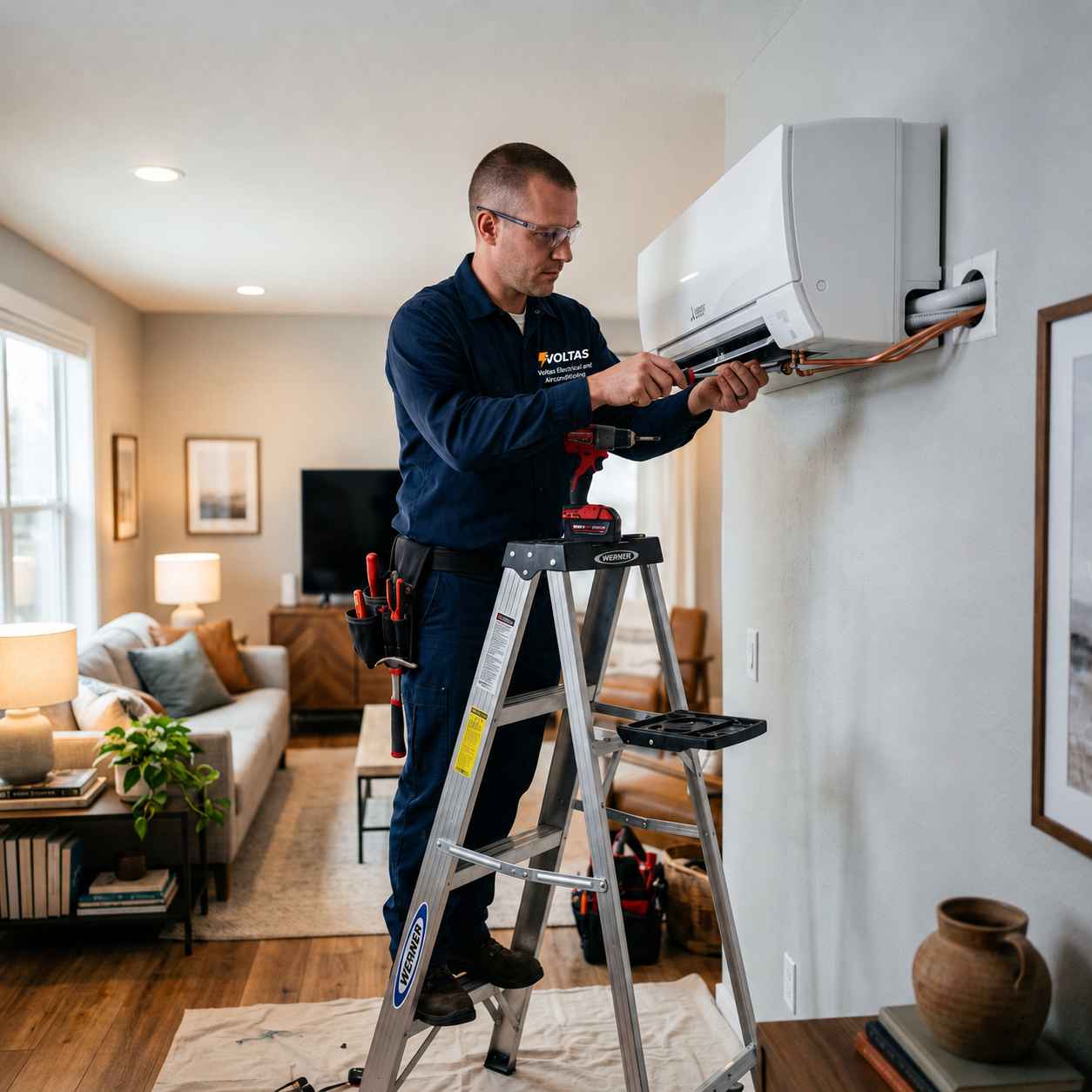
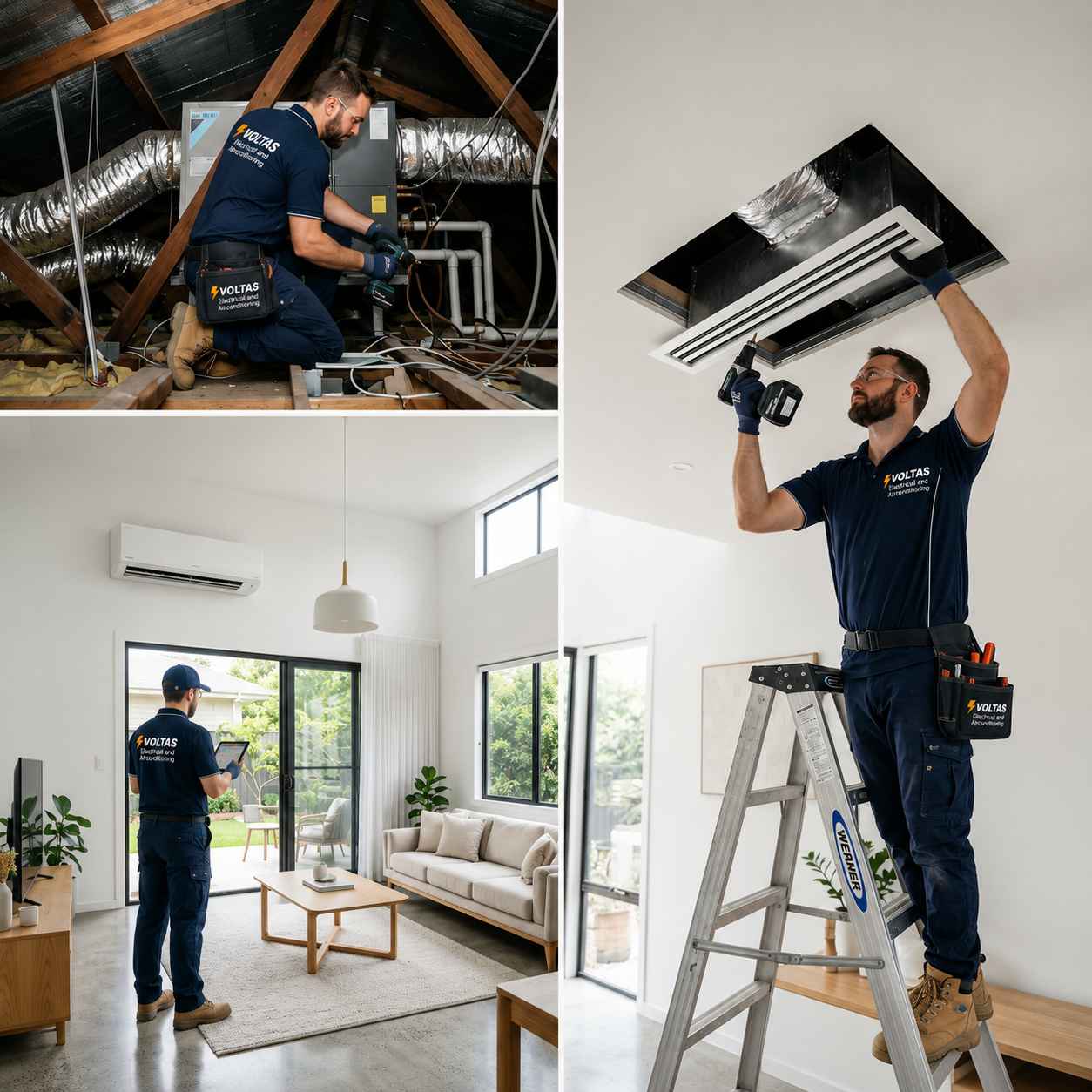
We're Voltas Electrical & Airconditioning, a licensed Adelaide electrical and air conditioning team (licences BLD 274739, PGE 265145, AU 61210) installing and servicing every major brand we support across Adelaide metro. We're already working exclusively with current-generation, compliant systems day to day, so this is the same picture we're giving our own customers on-site — not a trend piece written from a distance.
Refrigerants Are Changing — Here's What's Actually Different
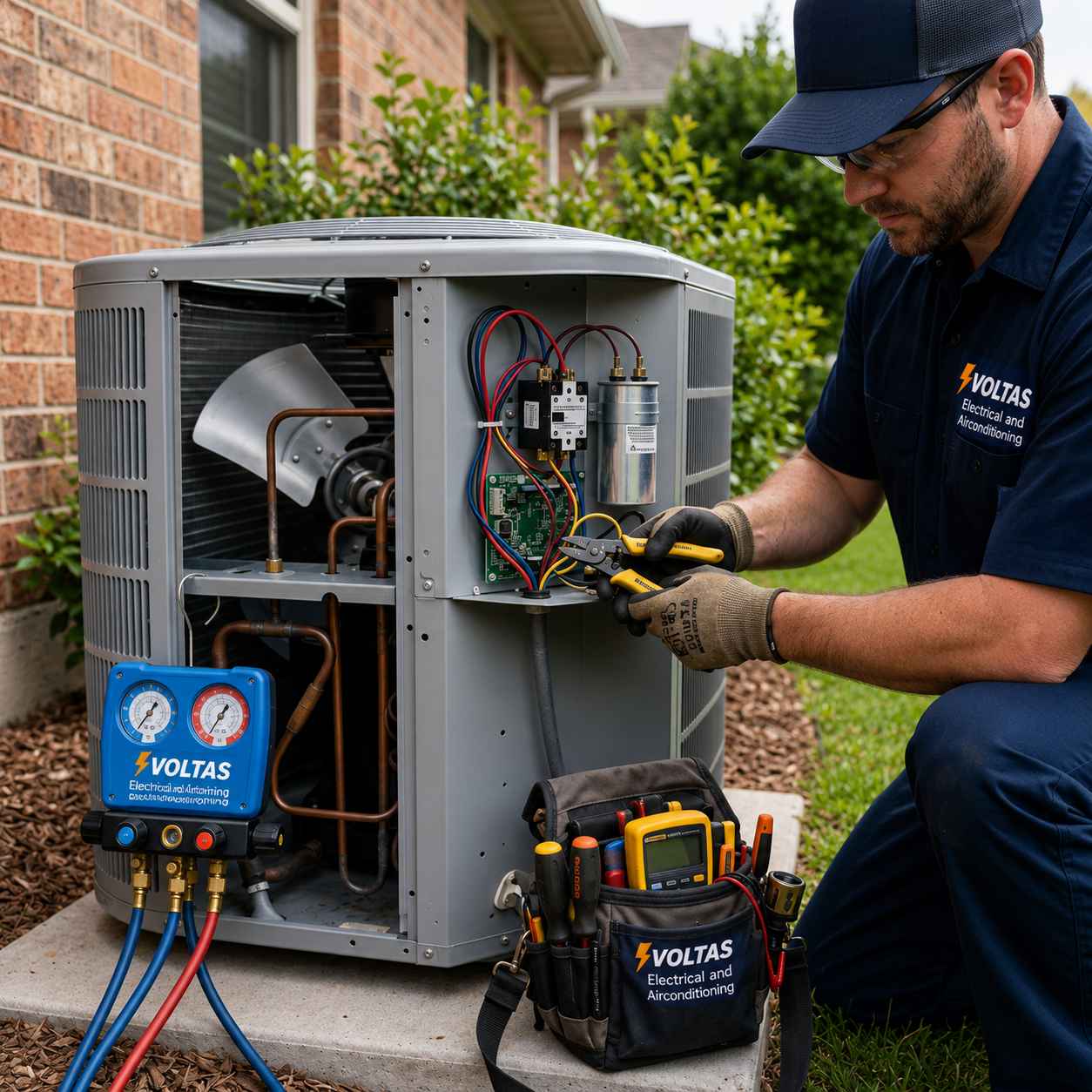
Since 1 July 2024, it's been illegal to import or manufacture small air conditioning equipment in Australia — up to a 2.6kg refrigerant charge, covering the vast majority of residential split systems — using a refrigerant with a global warming potential (GWP) above 750. That rules out the once-standard R410A and R134a for new equipment. From 1 July 2025, the same restriction extended to outdoor units of small multi-head split and VRF systems. R32, with a meaningfully lower GWP, has become the default fill for new residential and light-commercial systems as a result, per the federal Department of Climate Change, Energy, the Environment and Water's refrigerant rules.
R32 is classified A2L — mildly flammable — which matters for how a system is installed, charged, and serviced, but not for how safely it runs in your home once a licensed technician has done that work correctly. From 1 January 2026, the national HFC import quota was cut a further 19%, to roughly 4.25 million tonnes of CO₂-equivalent — nearly half the original baseline — with further step-downs scheduled through to an 85% total reduction by 2036. In practical terms: refrigerant for older systems doesn't disappear overnight, but it's a shrinking, tightening supply, not a stable one.
Refrigerant regulation
R32 is now the standard fill for new systems; older R410A units remain serviceable, but the supply is on a legislated downward path through to 2036.
Electrification & rebates
Reverse-cycle systems are increasingly subsidised as states push homes off gas heating, with SA's own REPS and City of Adelaide schemes already live.
Smart, connected controls
WiFi control, zoning, and solar/battery integration are becoming standard inclusions rather than a premium add-on on new installs.
Installer shortage
A genuine, documented shortage of licensed HVAC technicians nationally means longer lead times and more value in an established, licensed team.
Not sure if your current system is on borrowed refrigerant time?
Ask Us to Check ItElectrification Is Accelerating — And So Are the Incentives
Nationally, states are leaning harder on electrification — Victoria's residential gas-heater phase-out deadline lands in early 2027, and while South Australia hasn't set a comparable gas cut-off, the incentive structure here is already shifting the same direction. South Australia's Retailer Energy Productivity Scheme (REPS) doesn't hand out a flat government cheque — it requires participating energy retailers to offer subsidised efficiency upgrades instead — but the real-world effect can be significant: eligible concession card holders or renters paying $500 or less can sometimes access a 7-star energy-efficient reverse-cycle system fully installed for as little as $399, per SA's Department for Energy and Mining. Separately, the City of Adelaide's own Sustainability Incentives Scheme covers up to 50% (capped at $2,000) of the cost of swapping a gas appliance for an electric one.
None of this makes reverse-cycle air conditioning free, but it does mean the gap between "gas heating plus a cooling-only AC" and "one efficient reverse-cycle system doing both jobs" keeps narrowing. If you're weighing that decision, our installation team can walk you through what you'd actually be eligible for on a specific property, rather than a generic estimate.
Smart, Connected Systems Are Becoming the Default, Not the Upgrade
WiFi app control, room-by-room zoning, and scheduling that adapts to actual usage patterns used to be the expensive option on a quote. On current-generation systems, most of that is now built in as standard rather than a paid extra, and it's increasingly designed to talk to the rest of a home's energy setup rather than sit in isolation. That matters most for households running or planning solar and battery storage, where a system that can shift its heaviest cooling load to the middle of the day — when solar generation is highest — measurably changes the household's real running cost. If that's relevant to your home, our guide on whether your switchboard is solar and battery ready covers the electrical side of that setup in detail.
The Installer Shortage Is Real — And It's Changing How Far Ahead You Need to Book
Australia's air conditioning and refrigeration trade has one of the lowest vacancy-fill rates of any occupational group, and industry estimates put the number of qualified HVAC&R technicians nationally at around 43,000, with roughly 8,700 more currently in training — a pipeline that hasn't kept pace with demand. National spending on air conditioning equipment and installation more than doubled over the decade to 2022, from roughly $5.8 billion to $12.7 billion, and that demand hasn't eased off since. For homeowners, the practical effect is straightforward: fewer available appointment slots, especially once the weather actually turns hot, and more reason to choose an established, licensed team over whoever answers the phone fastest during a heatwave. If timing is the main thing on your mind, our guide on the best time of year to service your air conditioner and our breakdown of how often a system actually needs servicing both cover the booking side of this in more depth.
We see all of this play out differently depending on the type of housing stock involved. Older, established areas like Norwood still have a lot of original systems running on ageing refrigerant that are approaching a genuine repair-versus-replace decision, while newer estates such as Craigmore are more often installing straight onto current-generation R32 systems from the outset — which is exactly why "should I upgrade now" doesn't have one universal answer; it depends on what's already on the wall.
Frequently Asked Questions
What refrigerant do new air conditioners use in Australia now?
Almost all new residential split systems sold in Australia now use R32, after federal rules banned importing or manufacturing small air conditioning equipment using higher-GWP refrigerants like R410A or R134a from 1 July 2024, extended to outdoor units of small multi-head and VRF systems from 1 July 2025. R32 has a lower global warming potential and is mildly flammable (A2L classified), which is why installation and servicing should always be handled by a licensed technician.
Will my older air conditioner still be serviced as refrigerant rules change?
Yes. The phase-down restricts what can be imported and manufactured going forward, not what's already installed — existing R410A systems can still be serviced and, where needed, topped up using existing refrigerant stock. Over time, as import quotas keep shrinking toward an 85% cut by 2036, servicing older systems may become relatively more expensive, which is worth factoring into a repair-versus-replace decision on an ageing unit.
Are there rebates for upgrading to a reverse-cycle air conditioner in South Australia?
There's no direct flat cash rebate from the SA Government, but the state's Retailer Energy Productivity Scheme (REPS) requires energy retailers to offer subsidised efficiency upgrades, and eligible concession card holders or low-income renters can sometimes access a 7-star reverse-cycle system fully installed for as little as $399 through a participating retailer. The City of Adelaide separately runs a Sustainability Incentives Scheme covering up to 50% (capped at $2,000) of the cost of replacing a gas appliance with an electric one.
Why is it taking longer to book an air conditioner installation in Adelaide?
Australia is short on qualified air conditioning and refrigeration technicians — industry figures put the trade's job-vacancy fill rate among the lowest of any occupational group, while national spending on air conditioning equipment and installation has more than doubled over the past decade. That combination of rising demand and a shrinking pool of licensed technicians is why booking ahead, especially before spring, matters more now than it used to.
Should I upgrade my air conditioner now or wait for newer technology?
If your current system is more than 10-12 years old, nearing the end of its life, or still running on an older refrigerant, there's little upside in waiting — today's R32 reverse-cycle systems are already significantly more efficient, and further refrigerant-related cost pressure on old systems is coming, not going away. If your system is newer and running well, a routine service is a better near-term move than a premature replacement.
Not Sure Where Your Own System Sits in All This?
We'll give you a straight answer on whether your current system, refrigerant, and setup are keeping pace — no pressure, no upsell.
Regulatory and rebate detail sourced from the Department of Climate Change, Energy, the Environment and Water's refrigerant rules (dcceew.gov.au), SA's Department for Energy and Mining (energymining.sa.gov.au), the City of Adelaide's Sustainability Incentives Scheme, and published Australian HVAC&R workforce and equipment-spending figures. For our own current installation and servicing approach, see our air conditioning installation page.
Disclaimer: This article is provided as general information and guidance only. It draws on publicly available sources, government and industry publications (referenced where relevant), and Voltas Electrical Adelaide's own trade experience — it is not personalised advice for your specific property and does not replace a licensed, on-site assessment. Regulations, pricing, and product or brand details can change over time, so please independently verify anything relevant to your decision and seek your own professional advice before acting. To the fullest extent permitted by law, Voltas Electrical Adelaide accepts no responsibility or liability for any loss, damage, or other outcome arising from reliance on the information in this article. Where this article refers to a same-day or obligation-free quote or assessment, that refers to the quote or assessment itself — a site visit to a property well outside our normal Adelaide metro service area may incur a travel or call-out fee, as set out in our Terms & Conditions, which also has full details on the points above.