Adelaide's summers don't do things by halves — hot, dry stretches with multiple days in the high 30s and low 40s are a normal part of the season here, not a rare event. On days like that, the air conditioning bill can feel like it's completely out of your control. In practice, a handful of genuinely effective habits make a real difference, and none of them involve simply toughing out the heat.
We're Voltas Electrical & Airconditioning, a licensed Adelaide air conditioning and electrical team (licences BLD 274739, PGE 265145, AU 61210), and these are the same practical changes we talk customers through on-site — not generic advice written for a mild climate that doesn't match what an Adelaide summer actually throws at a system.
Set the Right Temperature — Not the Coldest One
The single biggest lever most people get wrong is the thermostat setting itself. Energy.gov.au recommends 25-27°C for summer cooling, and every degree colder than that can add roughly 5-10% to your running cost — without the room actually cooling any faster. A thermostat setting doesn't control how quickly a system works; it controls the target the system stops at. Setting it to 18°C on a 42°C day doesn't cool the room to a comfortable temperature any sooner, it just means the system keeps running flat-out for longer trying to reach a target it may never comfortably hit.
Stop the Heat Getting In Before It Reaches Your AC
Every degree of heat that gets into the house before the air conditioner switches on is heat the system then has to remove — so reducing how much gets in is free capacity you're not using. Closing blinds or curtains on west-facing windows during the afternoon, before the sun hits them directly, makes a genuine difference on a hot day. External shading (awnings, shade sails, established trees) helps even more than internal blinds, since it stops the heat radiating through the glass in the first place rather than blocking it after the fact. Sealing obvious draughts around doors and windows matters here too — it works both ways, keeping cool air in as much as keeping hot air out.
25-27°C, not colder
Each extra degree colder than this range adds 5-10% to running cost for barely any extra comfort.
Ceiling fan running too
Airflow makes you feel several degrees cooler, letting you raise the thermostat while feeling just as comfortable.
Block the afternoon sun
Close west-facing blinds before the heat hits, so the system isn't fighting sun-heated glass all afternoon.
Condition occupied rooms only
Close doors or unused zones consistently — conditioning empty rooms is pure wasted running cost.
Bill climbing faster than the temperature explains?
Get It Checked TodayCeiling Fans and Zoning: Free Capacity You're Not Using
A ceiling fan doesn't actually lower a room's temperature, but the airflow it creates makes your skin feel several degrees cooler than the number on the thermostat — which means you can raise the air conditioner's setpoint a couple of degrees and still feel just as comfortable, at a fraction of a fan's running cost compared to the air conditioner working harder. It's one of the cheapest changes available, and most Adelaide homes already have the fans installed and simply aren't using them alongside the AC. Our ceiling fan vs air conditioner breakdown goes into exactly why a fan cools people rather than rooms, and when a genuine Adelaide heatwave means fans alone won't cut it.
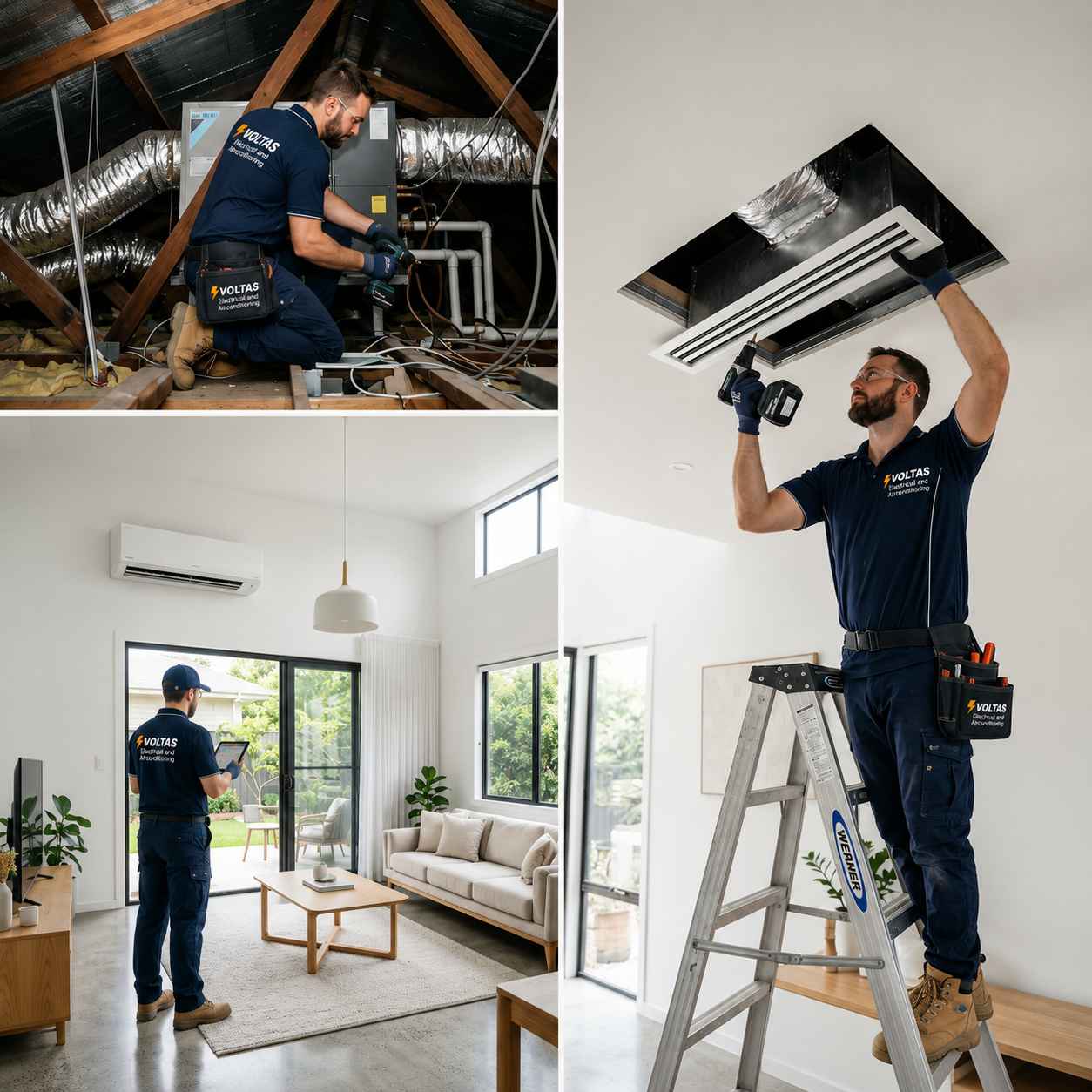
If you're running a ducted system, zoning works the same way in principle: conditioning only the rooms you're actually using, consistently, rather than the whole house by default. Our running cost breakdown covers exactly how much difference zoning discipline makes with real numbers, and our complete guide to ducted air conditioning explains how zoning is actually set up if you're not sure how many zones your system has or how they're controlled.
Timing Matters: Pre-Cooling Beats Cranking It Up Mid-Heatwave
Starting the air conditioner from a house that's already 34°C inside means the system has a much bigger gap to close than if it started from a house that never got that hot in the first place. Running the system for a shorter period earlier in the day — before the heat properly sets in — to bring the house down to a comfortable temperature, then maintaining rather than re-fighting the heat from scratch mid-afternoon, is generally more efficient than waiting until it's uncomfortable and cranking the system hard. If you're on a time-of-use electricity plan, shifting more of your cooling to earlier in the day where practical can also help, and if you have solar, running the system while panels are actually generating is the cheapest power you'll use all day — our guide on solar and battery readiness covers the electrical side of pairing the two.
When a High Bill Means Something's Actually Wrong
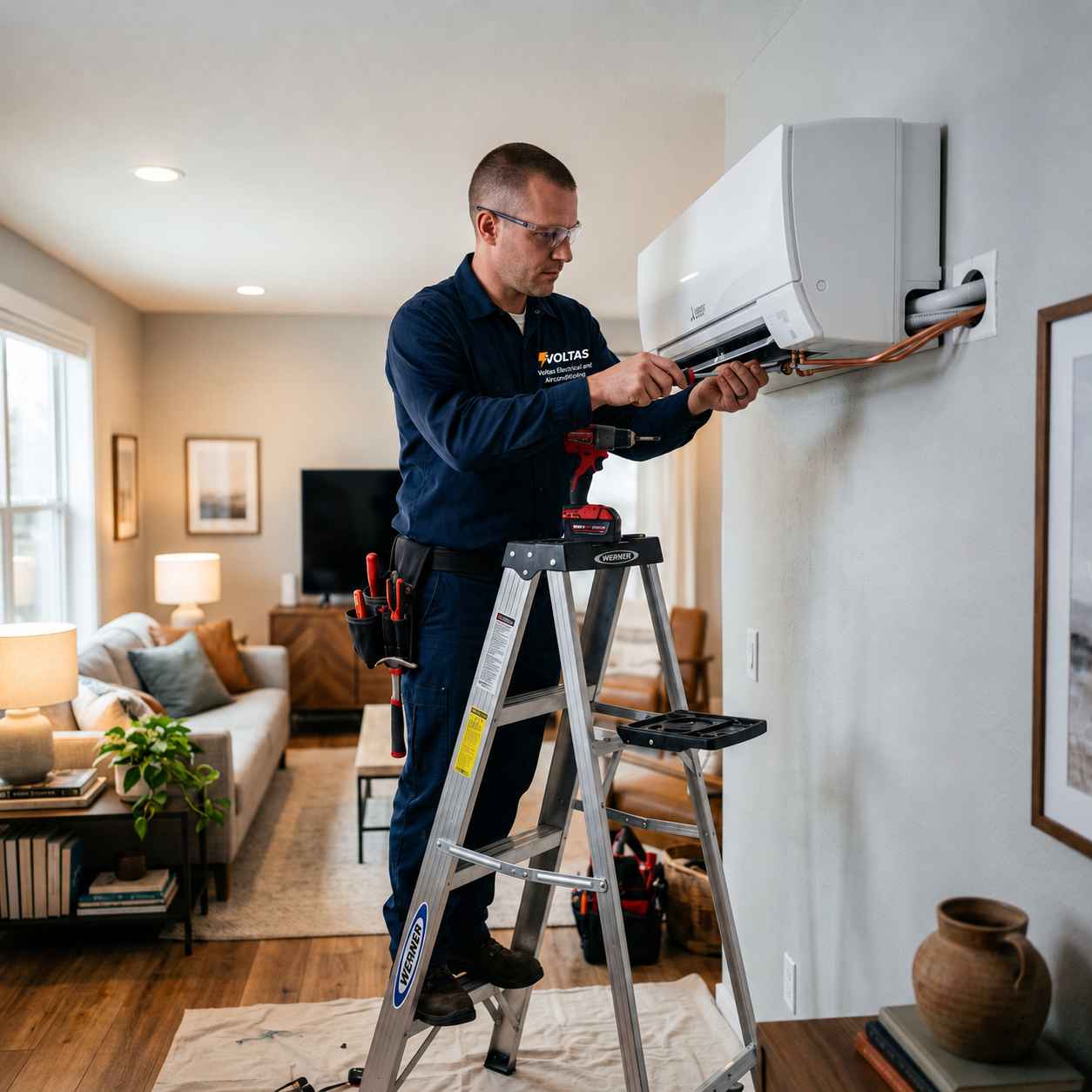
All of the above assumes the system itself is working properly — and a lot of the time, a bill that's crept up year on year isn't a habits problem at all. Dirty filters and coils make a system work harder for the same result, a slow refrigerant leak quietly reduces efficiency without any obvious symptom, and a unit that was undersized (or oversized) for the space will always cost more to run than one correctly matched to the room. If your habits genuinely haven't changed but the bill has jumped noticeably, that's the point to book a check rather than assume it's just a hotter summer. Our guides on how often to service your air conditioner and the best time of year to book it in cover the maintenance side, and our repair & service team can tell you within one visit whether it's a habits issue or a system issue.
We see this play out differently by suburb, too. Older established homes around Paradise and Rostrevor often have systems that were correctly sized decades ago for a house that's since been extended or had insulation added or removed, which quietly changes the actual cooling load without anyone realising — while newer builds in areas like Gulfview Heights are more likely to have a system sized correctly for the home as it stands today.
Frequently Asked Questions
What temperature should I set my air conditioner to in summer to save money?
Energy.gov.au recommends 25-27°C for summer cooling, and every degree colder than that can add roughly 5-10% to your running cost without meaningfully speeding up how fast the room actually cools. Setting the thermostat lower doesn't cool a room faster — it just makes the system run longer and harder to reach a temperature that barely feels different.
Does running the air conditioner constantly cost more than turning it on and off?
For most modern inverter systems, leaving it running at a steady, sensible temperature usually costs less than switching it off and on repeatedly, because a full restart pulls the room back down from a hotter starting point each time, which uses more energy than maintaining a steady temperature. The exception is leaving an empty house running all day for no reason — turning it off (or using a timer) when nobody's home for hours still makes sense.
Can a ceiling fan actually reduce my air conditioning costs?
Yes. A ceiling fan doesn't lower the room's actual temperature, but the airflow makes you feel several degrees cooler than the thermostat reading, which lets you raise the air conditioner's setpoint a couple of degrees while feeling just as comfortable — and every degree higher meaningfully cuts running cost. Fans use very little power compared to air conditioning, so pairing the two is one of the cheapest changes available.
Why is my air conditioning bill suddenly higher this summer than last year?
A sudden jump usually points to one of a few things: a system overdue for a service (dirty filters and coils make it work harder for the same result), a refrigerant leak reducing efficiency, a unit that was undersized or oversized for the space to begin with, or simply a hotter summer than the year before. If your habits haven't changed but the bill has jumped noticeably, it's worth having the system checked rather than assuming it's just the weather.
Does closing doors and using zoning actually save money on ducted air conditioning?
Yes, but only if zones are actually closed off consistently, not just occasionally. Conditioning only the rooms you're using rather than the whole house at once is one of the most effective cost-saving habits for a ducted system — a fully zoned system left running on every zone most of the time behaves almost identically to an unzoned one from a cost perspective.
Want to Know If It's Habits or the System Itself?
We'll check your system honestly and tell you whether a setting change or a genuine repair is what's actually driving your bill up.
Thermostat efficiency guidance per energy.gov.au's summer energy savings advice; electricity pricing context per the Australian Energy Regulator's 2026-27 Default Market Offer. For a full running-cost comparison by system type, see our ducted vs split running costs guide.
Disclaimer: This article is provided as general information and guidance only. It draws on publicly available sources, government and industry publications (referenced where relevant), and Voltas Electrical Adelaide's own trade experience — it is not personalised advice for your specific property and does not replace a licensed, on-site assessment. Regulations, pricing, and product or brand details can change over time, so please independently verify anything relevant to your decision and seek your own professional advice before acting. To the fullest extent permitted by law, Voltas Electrical Adelaide accepts no responsibility or liability for any loss, damage, or other outcome arising from reliance on the information in this article. Where this article refers to a same-day or obligation-free quote or assessment, that refers to the quote or assessment itself — a site visit to a property well outside our normal Adelaide metro service area may incur a travel or call-out fee, as set out in our Terms & Conditions, which also has full details on the points above.