If you've been shopping for a new air conditioner and keep seeing "reverse cycle" listed alongside "cooling only," it's a genuinely important distinction — not just marketing language. The name describes exactly what the system does: it reverses its own refrigeration cycle to switch between pulling heat out of your home (cooling) and pulling heat into your home from the outside air (heating). Understanding how that works helps you compare products properly and avoid paying for capability you don't need, or worse, missing out on a feature that would have solved your winter heating at the same time.
We're Voltas Electrical & Airconditioning (licences BLD 274739 · PGE 265145 · AU 61210), and we install and service reverse cycle systems across Adelaide metro every week, from Norwood character homes to newer builds in Golden Grove. Same-day appointments are the norm, and every install carries our workmanship guarantee on top of the manufacturer's warranty — so this guide reflects what we actually see working (and not working) in real Adelaide homes, not generic product-brochure copy.
What "Reverse Cycle" Actually Means
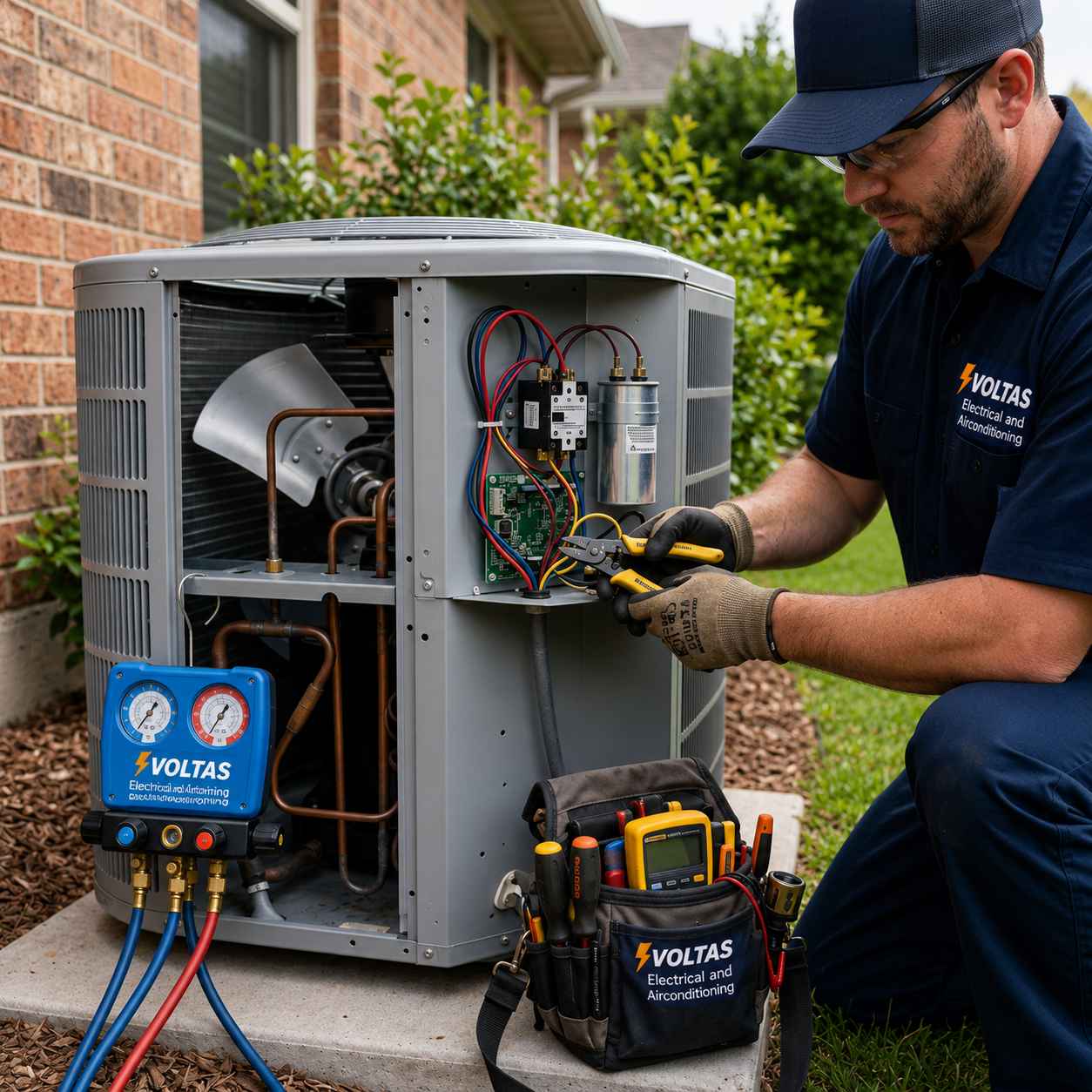
Every air conditioner, reverse cycle or not, works by moving heat rather than creating it directly — a refrigerant absorbs heat at one point in the system and releases it at another, using a compressor to drive the cycle. A cooling-only unit can only run this cycle in one direction: heat is always pulled from inside the room and dumped outside. A reverse cycle system has a component called a reversing valve that lets it run the exact same cycle backwards on demand.
In cooling mode, it works like any standard air conditioner — indoor heat and humidity are extracted and released outdoors. Switch it to heating mode, and the reversing valve flips the refrigerant flow: the outdoor unit's coil now extracts latent heat from the outside air (even when that air feels cold, there's still usable heat energy in it down to well below zero), and the indoor unit releases that heat into the room. It's the same hardware, the same refrigerant, and the same compressor — just running in the opposite direction.
Not sure whether your existing system is reverse cycle, or whether a reverse cycle upgrade suits your home?
Get a Same-Day QuoteReverse Cycle vs Cooling-Only Units, and vs Separate Gas Heating
The comparison Adelaide homeowners actually need to make usually isn't reverse cycle versus nothing — it's reverse cycle versus running two separate systems: a cooling-only air conditioner for summer, plus a gas ducted heater, gas wall furnace, or panel heaters for winter. Adelaide's climate makes this comparison worth taking seriously. The city has a genuine Mediterranean-style climate: hot, dry summers where afternoon maximums regularly push into the mid-to-high 30s (and several days a year into the low 40s), and cool, wet winters where overnight minimums commonly sit in the high single digits. That's a real, two-season heating and cooling demand, not a mild climate where one or the other barely gets used.
A cooling-only split or ducted system handles the summer half of that equation well, but leaves you buying, installing, and maintaining an entirely separate heating appliance for winter — extra upfront cost, extra service calls, and in the case of gas heating, an ongoing gas supply connection charge on top of your electricity account regardless of how much gas you actually use. A reverse cycle system folds both jobs into one appliance, one thermostat, and one service schedule.
The running-cost side of the comparison generally favours reverse cycle too, for a simple reason: a reverse cycle system moves existing heat rather than generating new heat by burning gas or running resistive electric elements, which is inherently a more efficient process. A good reverse cycle system can deliver several units of heating (or cooling) energy for every unit of electricity it consumes, whereas a gas heater's efficiency is capped by how much of the fuel's energy actually converts to usable heat, and a resistive electric heater can, at best, only convert electricity to heat at roughly a one-to-one ratio. The exact saving for any individual home still depends on the specific system's star rating, how it's sized, current gas and electricity tariffs, and how well the home retains heat — so treat published running-cost comparisons as a guide, not a guarantee for your own bill.
Efficiency and Running Costs: What the Star Rating Actually Tells You
Every reverse cycle air conditioner sold in Australia carries a Zoned Energy Rating Label, administered under the Greenhouse and Energy Minimum Standards (GEMS) scheme. Unlike the old single-number star rating on other appliances, this label splits Australia into three climate zones — hot, average, and cold — and shows a separate star rating for cooling and for heating performance in each zone, because a system's efficiency genuinely does vary by climate. Adelaide sits in the "hot" zone for cooling performance, so when you're comparing units for a Adelaide home, check the rating specifically for that zone rather than an average across the whole label.
More stars means better efficiency and lower running costs for the same heating or cooling output — but only if the unit is sized correctly for the space. A high-star-rated system that's oversized for the room will short-cycle (switching on and off repeatedly rather than running efficiently at a steady load), which can actually cost more to run and provide worse comfort than a correctly sized mid-rated unit. This is exactly why we recommend a proper heat-load assessment over relying on a generic size chart — our guide to what size split system you actually need goes through the room-by-room factors we weigh on-site.
If you're specifically comparing running costs between different reverse cycle models before buying, our article on the cheapest air conditioners to run in Adelaide breaks down what actually drives the difference between a genuinely efficient system and one that just looks efficient on the box.
What to Look for When Choosing a Reverse Cycle System
Beyond the star rating, a handful of practical factors separate a reverse cycle system that performs well for years from one that becomes a service headache. This is the same checklist our technicians run through with customers during a quote:
Correct capacity for the space
Sizing in kW needs to match the actual room or zone, factoring in ceiling height, insulation, window orientation, and whether it's a closed room or an open-plan area — not just floor area alone.
Zoned Energy Rating for the hot climate zone
Compare the "hot zone" star rating specifically, since that's the relevant figure for Adelaide's summer cooling load, alongside the heating rating if winter performance matters to you too.
Brand reliability and local parts support
A well-known brand with an established Adelaide service network means faster repairs and easier access to genuine parts if something ever needs fixing years down the track.
Low-temperature heating performance
Not every reverse cycle system heats efficiently once outdoor temperatures drop close to freezing. If overnight winter minimums in your area regularly sit in single digits, check the manufacturer's rated heating capacity at low ambient temperature, not just the headline kW figure.
Split system vs ducted for whole-home coverage
A single split system heats and cools one room or zone well; if you want even temperature across multiple rooms, a ducted reverse cycle system is usually the more practical long-term choice.
Warranty and installer workmanship guarantee
The manufacturer's warranty covers the unit itself; a workmanship guarantee from your installer covers the install work — both matter, and we provide both on every system we fit.
Voltas supplies and installs reverse cycle systems from every major brand we service — including Daikin, Mitsubishi Electric, Mitsubishi Heavy Industries, Panasonic, Fujitsu General, LG, Samsung, Toshiba, Hitachi, and more — so the brand conversation during your quote is about matching the right system to your home, not steering you toward whatever's easiest to sell. See our full list on the brands we service page. If you're replacing an old, inefficient unit, it's also worth checking whether your household qualifies for a discount under South Australia's REPS scheme before you buy — see our guide to the SA REPS rebate for reverse cycle air conditioners for eligibility and how the claim process works.
Split System or Ducted Reverse Cycle — Which Suits Your Home?
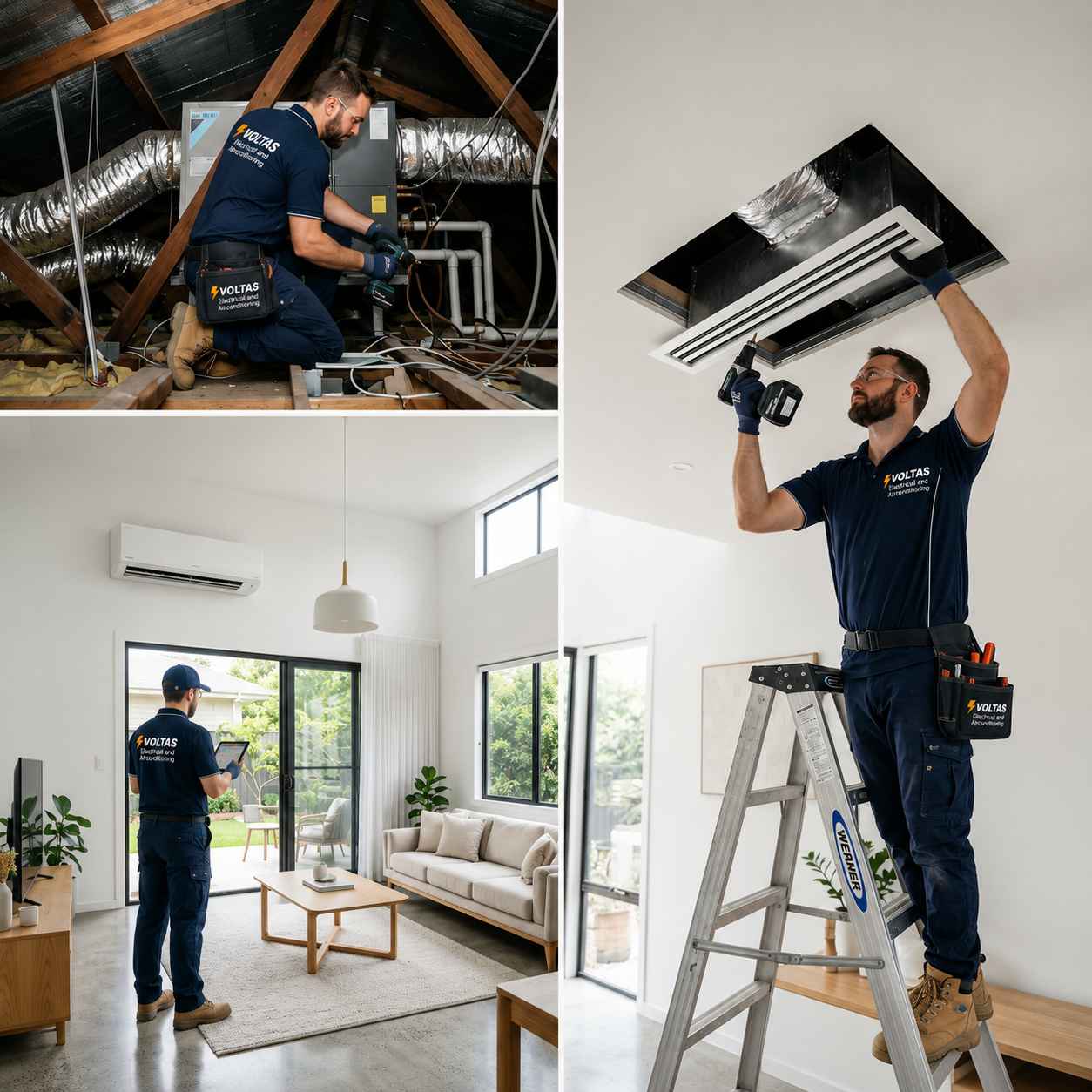
Both formats use the same reverse cycle principle described above; the difference is how the heating and cooling gets distributed through the house. A reverse cycle split system is a single indoor unit serving one room or open-plan zone — straightforward to install, and a sensible choice if you're heating and cooling one or two key living areas rather than the whole home. A reverse cycle ducted system uses one central unit connected to ceiling ducts feeding multiple rooms, giving whole-home coverage from a single, often more efficient, outdoor unit, typically with zoning so you're not heating or cooling rooms nobody's using.
If you're weighing this decision for your own home, our detailed comparison of split system vs ducted air conditioning and our ducted vs split running costs breakdown both go deeper into which format suits different Adelaide house layouts and budgets. For a full walkthrough of ducted reverse cycle specifically, our ducted air conditioning guide covers zoning, ductwork retrofits into older Adelaide homes, and what a typical install involves.
Frequently Asked Questions
What does "reverse cycle" actually mean on an air conditioner?
Reverse cycle means the air conditioner can run its refrigerant cycle in either direction: it pulls heat out of the room to cool it, or it reverses the cycle to pull heat from the outside air and pump it indoors to warm the room. One unit handles both jobs, unlike a cooling-only system that can only remove heat.
Is reverse cycle air conditioning cheaper to run than gas heating in Adelaide?
A correctly sized, high-star-rated reverse cycle system is generally cheaper to run for heating than a gas ducted or gas wall furnace system, because it moves existing heat rather than generating it by burning fuel, giving it a much higher efficiency ratio. The actual saving depends on your specific gas and electricity tariffs, the system's star rating, and how well the home is insulated, so treat any figure as a guide rather than a guarantee for your own bills.
What star rating should I look for on a reverse cycle air conditioner in Adelaide?
Look for the Zoned Energy Rating Label and check the rating for the "hot" climate zone, which is the relevant zone for Adelaide's summer conditions, alongside the rating for an average or cold zone if the unit will also do significant winter heating. Aim as high as your budget allows within the capacity you actually need, since an oversized high-star unit still costs more to buy and run than a correctly sized one with a slightly lower rating.
Can reverse cycle air conditioning replace gas heating completely in an Adelaide home?
Yes, in most Adelaide homes a correctly sized reverse cycle split or ducted system can fully replace gas space heating, and many homeowners are switching for lower running costs and to remove a second heating appliance from the house. Whether it makes sense for your specific home depends on room layout, insulation, and existing ductwork, which is worth a proper on-site assessment before committing.
Ready for One System That Handles Adelaide's Whole Year?
Our licensed technicians can assess your home and recommend the right reverse cycle system, correctly sized, with a same-day, obligation-free quote.
Sources referenced include the Bureau of Meteorology's Adelaide climate statistics (bom.gov.au) and the Australian Government's Zoned Energy Rating Label guidance for air conditioners (energyrating.gov.au).
Disclaimer: This article is provided as general information and guidance only. It draws on publicly available sources, government and industry publications (referenced where relevant), and Voltas Electrical Adelaide's own trade experience — it is not personalised advice for your specific property and does not replace a licensed, on-site assessment. Regulations, pricing, and product or brand details can change over time, so please independently verify anything relevant to your decision and seek your own professional advice before acting. To the fullest extent permitted by law, Voltas Electrical Adelaide accepts no responsibility or liability for any loss, damage, or other outcome arising from reliance on the information in this article. Where this article refers to a same-day or obligation-free quote or assessment, that refers to the quote or assessment itself — a site visit to a property well outside our normal Adelaide metro service area may incur a travel or call-out fee, as set out in our Terms & Conditions, which also has full details on the points above.