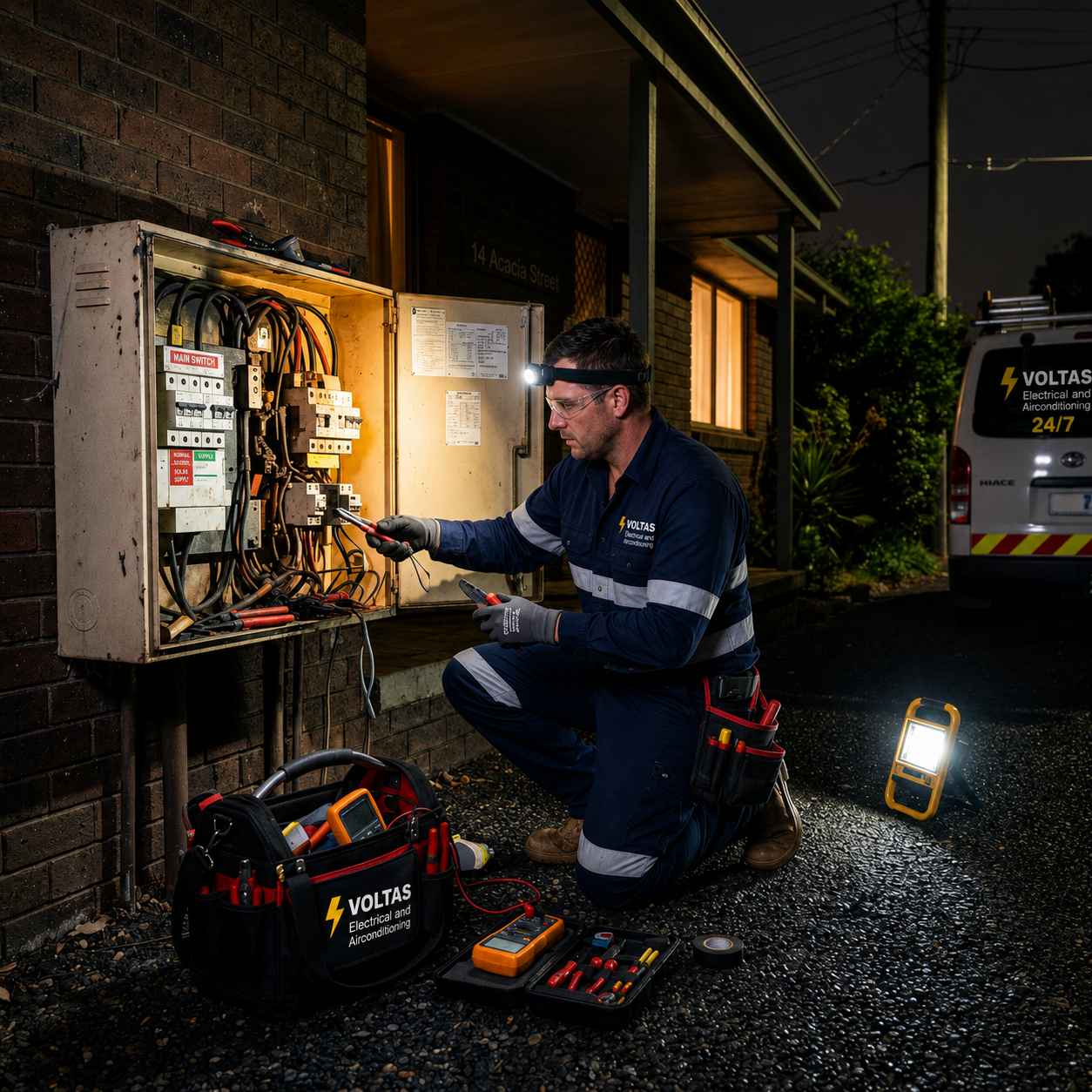
Most Adelaide homeowners don't wake up one day and decide their house needs rewiring — it's usually a slow accumulation of small annoyances that, taken individually, are easy to explain away. A light that flickers when the kettle switches on. A safety switch that trips a little more often than it used to. A power point near the laundry that feels slightly warm. Any one of these could be nothing. Together, especially in a home built before the 1980s, they're a pattern worth taking seriously.
We're Voltas Electrical & Airconditioning, a licensed Adelaide electrical team (licences BLD 274739, PGE 265145, AU 61210) that diagnoses and rewires older properties across Adelaide metro every week — from 1950s brick bungalows in the inner suburbs to 1970s and 80s homes further out. This guide covers the real warning signs, what actually happens during a full rewire, and honest 2026 South Australian pricing, so you can work out whether it's time to get a professional opinion.
The Warning Signs Worth Taking Seriously
None of these signs are automatically an emergency, but each one is a genuine reason to get your wiring assessed rather than waiting for it to get worse.
Power points or switches feel warm
Warmth at a switch or outlet points to a loose connection or overloaded circuit generating heat behind the wall — a genuine fire risk, not a quirk.
Lights flicker or dim when an appliance switches on
This can indicate a loose wiring connection or an overloaded circuit rather than just an ageing bulb.
Your safety switch or fuse trips constantly
Occasional trips from a faulty appliance are normal. Frequent, unexplained trips usually mean a deeper wiring fault.
A burning-plastic smell near sockets
Treat this as urgent — switch off the circuit if you safely can and call an electrician immediately, don't wait for a scheduled visit.
Outlets missing an earth pin, or that feel loose
Common in homes that predate modern earthing requirements — a clear sign the circuit hasn't been updated to current standards.
Roof wiring looks brittle, sticky, or discoloured
Visible during a roof inspection or renovation — a strong sign the insulation around the conductors has started to degrade.
Why Older Adelaide Homes Are Especially at Risk
Adelaide has one of the older housing stocks of any Australian capital, with entire suburbs built well before modern wiring standards existed. Homes built before the 1980s frequently still contain their original wiring insulated with rubber, cloth, or cotton rather than today's PVC — materials that were perfectly acceptable when installed but degrade, dry out, and become brittle over decades. That degradation is exactly what shows up as the cracked, sticky, or discoloured insulation techs sometimes find during a roof inspection, and it's a genuine fire hazard rather than just cosmetic wear.
This is a different problem to an outdated switchboard, though the two often go hand in hand. Our switchboard upgrade guide covers the warning signs specific to the board itself — old ceramic fuses instead of circuit breakers, no safety switches, insufficient capacity for modern appliances. A full rewire is a separate, bigger job: replacing the actual cabling running through your walls and ceiling, not just the board it all connects to. It's common for an inspection prompted by switchboard concerns to also turn up wiring that's overdue for replacement, and vice versa.
Not sure if it's the wiring, the switchboard, or both? We'll tell you straight, on-site, at no cost.
Book a Same-Day Inspection2026 Cost of a Full Rewire in South Australia
Based on current South Australian market pricing, here's a realistic starting point by property size:
Small home (2 bed, 1 bath)
$4,000–$6,000Straightforward access, standard circuit count.
Average home (3 bed, 1–2 bath)
$6,500–$9,000The most common quote range for an established Adelaide house.
Large or two-storey home
$9,000–$15,000+More circuits, more cable runs, and often harder access.
Full room rewire or fit-out
A few hours–several daysA partial job (one room or a renovation area) rather than the whole house.
Three things move a quote more than anything else: wall and ceiling access (a single-storey home with generous roof space is far cheaper to rewire than a double-storey with plasterboard ceilings throughout), the presence of asbestos sheeting common in pre-1990 Adelaide homes (which needs safe handling before any wall access), and any additional structures like a granny flat or detached garage that also need new circuits run to them. For comparison, national Australian pricing surveys put a full rewire anywhere from roughly $6,000 to $20,000, and older properties specifically from around $5,000 to $15,000 — broadly consistent with the South Australian figures above, with the exact number always coming down to your specific property.
What Actually Happens During a Full Rewire
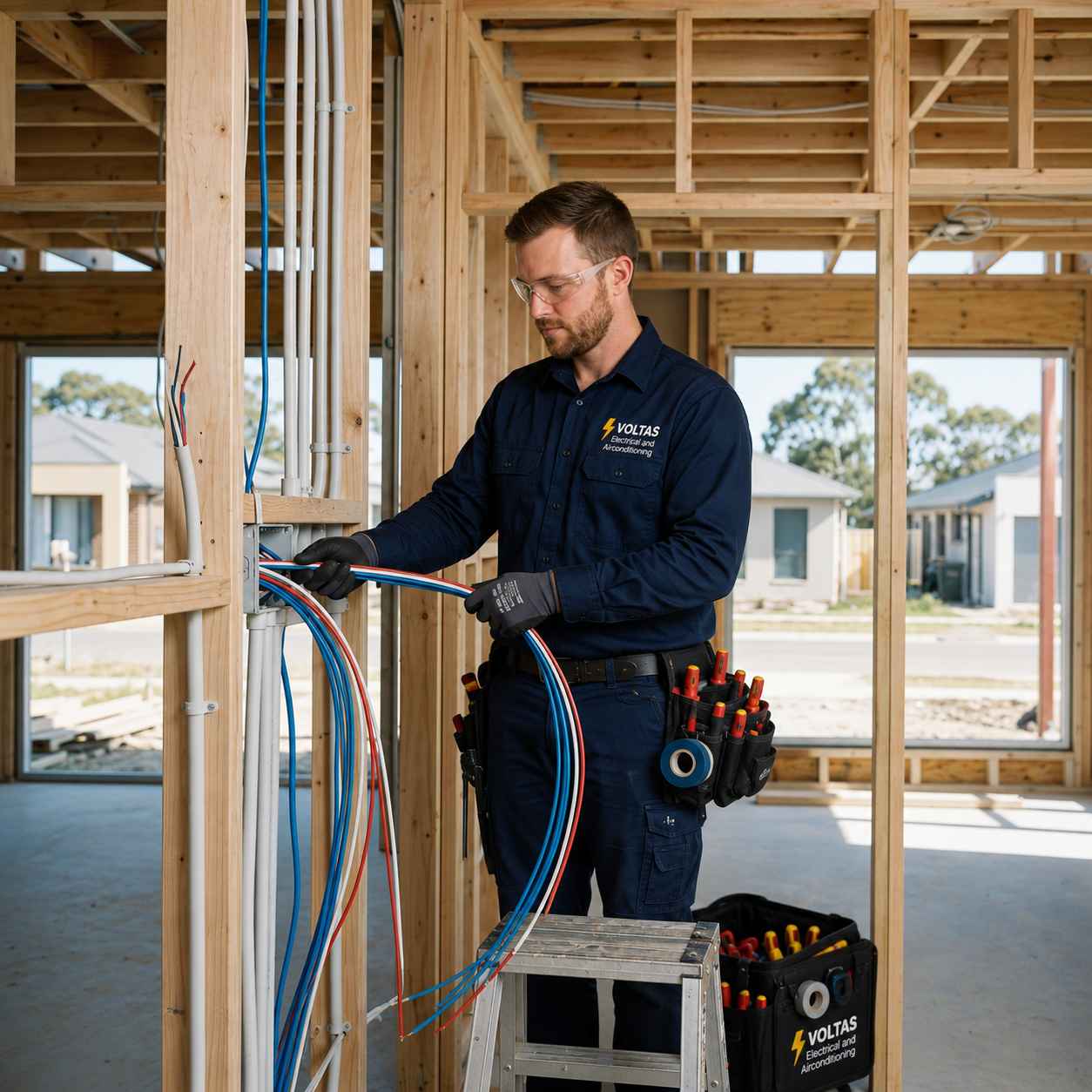
A full rewire means every cable running through your walls, ceiling, and subfloor is replaced with new, correctly rated cabling, along with new power points, switches, and light fittings as needed. It's genuinely disruptive work — plasterboard is typically cut and patched to run new cable through existing walls, ceiling access is needed throughout the roof space, and depending on the size of the job you may need to be out of parts of the house, or the whole house, for one or more days. A good electrician will walk you through exactly what to expect before work starts, not after the walls are already open. Our electrical installation team handles both full rewires and smaller room-by-room jobs, and if something's already actively faulty rather than just old, our fault finding & repair team can diagnose and stabilise it first.
Insurance, Compliance, and Certificates of Compliance
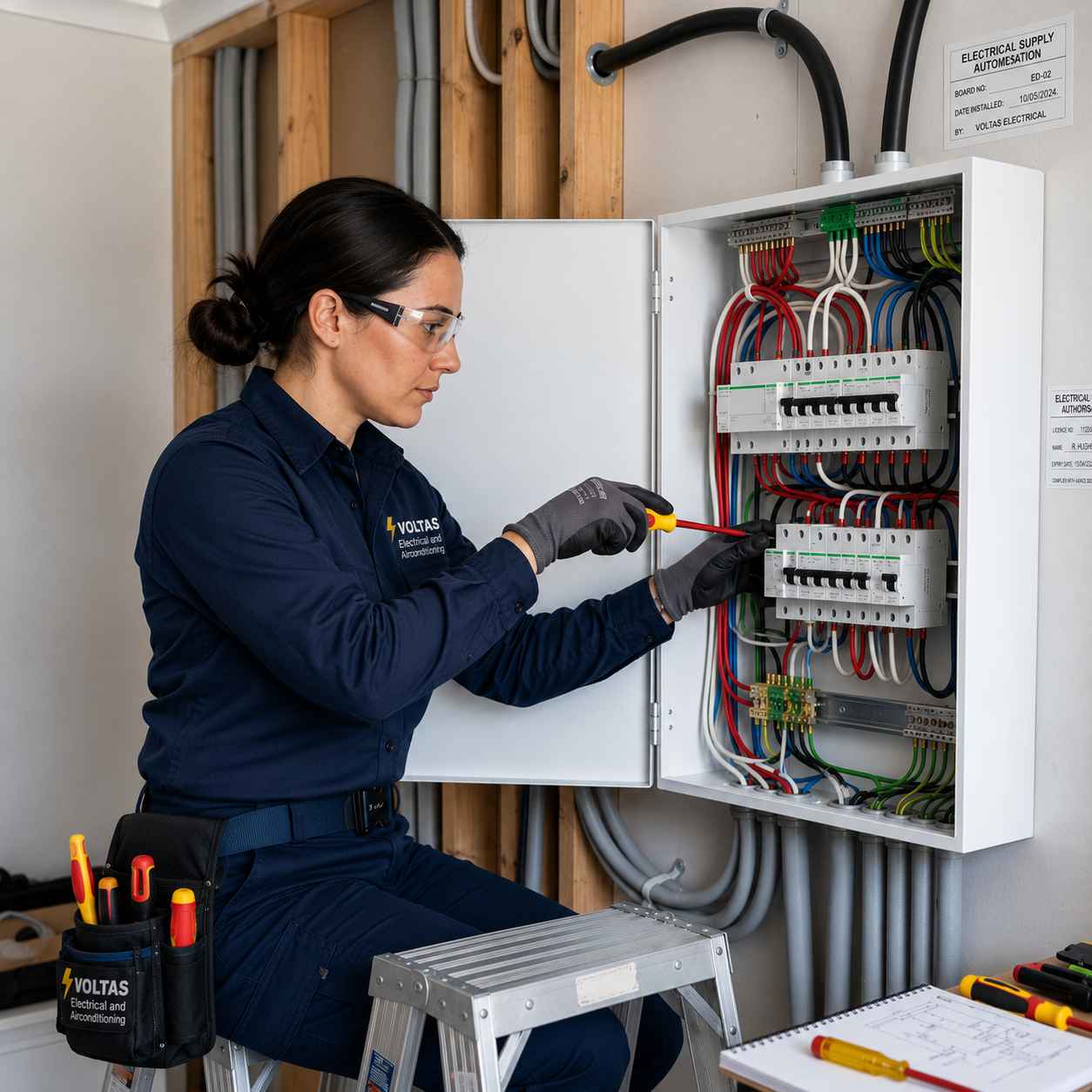
Whether existing old wiring itself affects an insurance claim depends on your specific policy and the circumstances — that's a question for your insurer, not something to assume either way. What's unambiguous is the paperwork around any NEW electrical work: licensed electricians must issue an electronic Certificate of Compliance (eCoC) for most work, confirming it was properly licensed and tested to Australian Standards. Without a valid eCoC, insurers can refuse a claim connected to that work if it later causes a fire or damage — one more reason a documented, licensed rewire is worth doing properly rather than patching individual symptoms as they appear. Safety switches (RCDs) are also required on relevant circuits for new and altered work under AS/NZS 3000, with specific extra obligations depending on whether a property is being sold, rented, or renovated; if you're ever unsure what applies to your situation, South Australia's Office of the Technical Regulator is the authoritative place to check.
Which Adelaide Homes Should Get a Wiring Assessment First?
We see this pattern most in Adelaide's established, character-home suburbs — areas like North Adelaide and parts of Modbury Heights, where original housing stock from well before modern wiring standards is common, sometimes with only partial updates done over the decades rather than a genuine full rewire. If your home was built before the 1980s and hasn't had a documented rewire since, or you're planning a renovation that will open up walls and ceilings anyway, that's the ideal time to get an inspection — doing it as part of other work already underway is almost always cheaper than a standalone job later.
Frequently Asked Questions
What are the signs my Adelaide home needs a full rewire?
The clearest signs are power points or switches that feel warm to touch, lights that flicker or dim when another appliance switches on, a safety switch or fuse that trips constantly, a burning-plastic smell near sockets, outlets with no earth pin or that feel loose, and wiring in the roof space that looks brittle, sticky, or discoloured. Any one of these on its own is worth a professional inspection.
How much does it cost to rewire a house in South Australia in 2026?
For a South Australian home, a small 2-bedroom, 1-bathroom property typically costs $4,000–$6,000 to rewire, an average 3-bedroom, 1–2-bathroom home runs $6,500–$9,000, and a large or two-storey home is usually $9,000–$15,000 or more. Difficult wall access, asbestos, or additional outbuildings can push costs higher.
Is old or faulty wiring covered by home insurance in Adelaide?
It depends on your policy and the circumstances of a claim, so this isn't something to assume either way — check your specific policy wording or ask your insurer directly. What is clear is that any new electrical work must come with an electronic Certificate of Compliance (eCoC); without one, insurers can refuse a claim connected to that work if it causes a fire or damage.
How long does a full house rewire take in Adelaide?
A full rewire of an established Adelaide home typically takes several days to around two weeks, depending on the size of the property, how accessible the wall and ceiling cavities are, and whether you're staying in the home while work is carried out. We'll give you a clear, specific timeframe as part of your quote.
Not Sure If Your Wiring Is a Real Risk?
We'll assess it on-site, tell you honestly what we find, and give you a clear, itemised quote if a rewire is genuinely needed — no scare tactics.
Guidance cross-checked against current AS/NZS 3000 Wiring Rules requirements, South Australia's Certificate of Compliance guidance (SA.GOV.AU) and Office of the Technical Regulator, current South Australian and Australia-wide rewiring cost surveys, and our own 2026 Adelaide quoting history. If your switchboard itself is the main concern rather than the wiring behind it, see our guide on when to upgrade your switchboard.
Disclaimer: This article is provided as general information and guidance only. It draws on publicly available sources, government and industry publications (referenced where relevant), and Voltas Electrical Adelaide's own trade experience — it is not personalised advice for your specific property and does not replace a licensed, on-site assessment. Regulations, pricing, and product or brand details can change over time, so please independently verify anything relevant to your decision and seek your own professional advice before acting. To the fullest extent permitted by law, Voltas Electrical Adelaide accepts no responsibility or liability for any loss, damage, or other outcome arising from reliance on the information in this article. Where this article refers to a same-day or obligation-free quote or assessment, that refers to the quote or assessment itself — a site visit to a property well outside our normal Adelaide metro service area may incur a travel or call-out fee, as set out in our Terms & Conditions, which also has full details on the points above.