Every Adelaide summer brings the same headline: a string of days pushing into the high 30s and low 40s, sometimes stretching on for a week or more. For homeowners in established suburbs like Norwood or coastal pockets like Glenelg, that heat isn't an abstract climate statistic — it's the difference between a comfortable evening and a genuinely miserable, unsafe one if the air conditioner can't keep up.
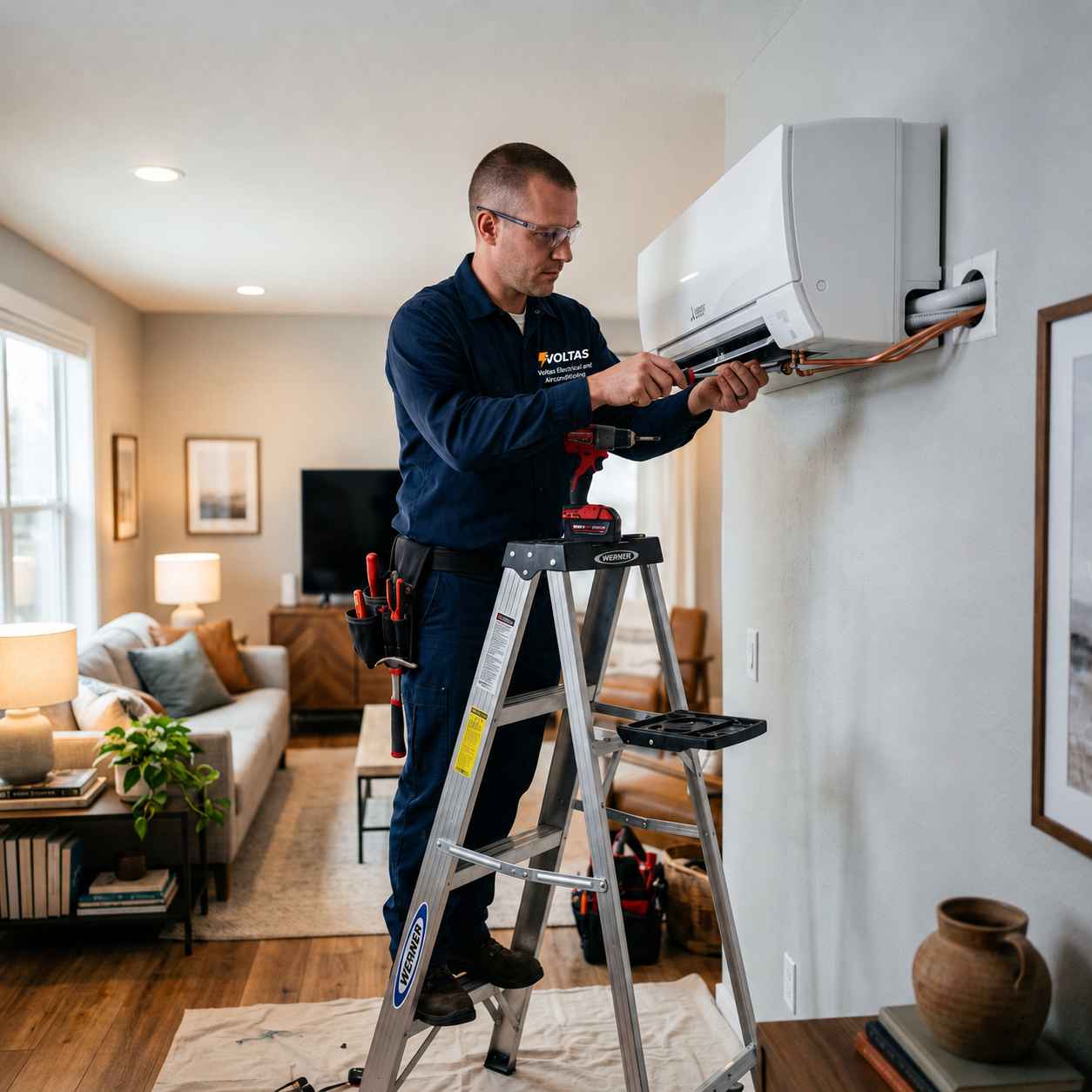
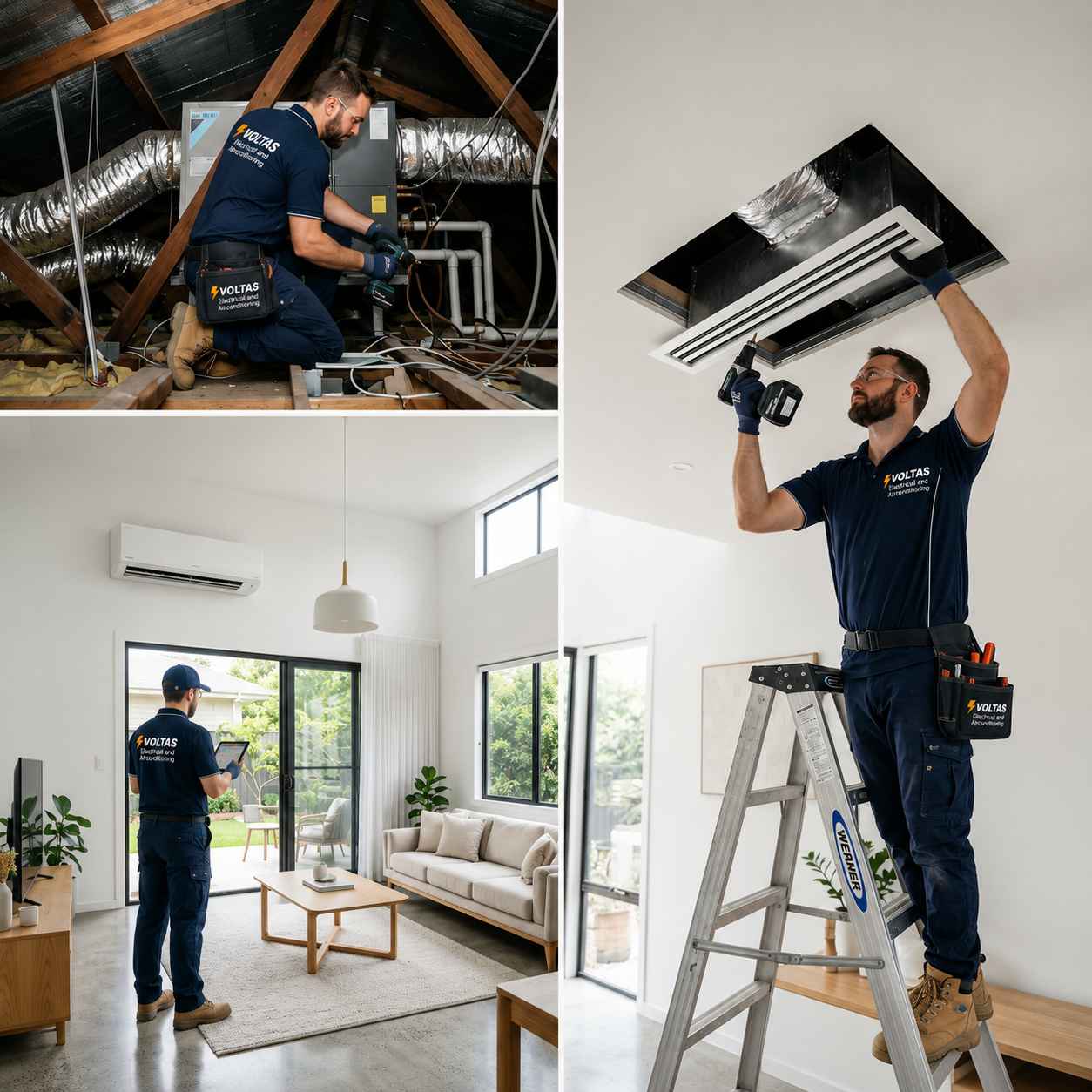
Voltas Electrical & Airconditioning has been installing, repairing, and maintaining air conditioning systems across Adelaide since 2010, holding licences BLD 274739 · PGE 265145 · AU 61210. We see the same pattern every summer: the calls for emergency repairs spike hardest on the days people need cooling most, and it's almost always a system that was undersized, neglected, or simply too old to cope with Adelaide's heat load in the first place.
What the real Bureau of Meteorology data says about Adelaide's heat
According to the Bureau of Meteorology's climate statistics for Adelaide, the average summer daily maximum sits around 26–29°C — but averages hide the extremes that actually matter for cooling. Adelaide typically records 2 to 3 days a year where the maximum temperature exceeds 40°C, on top of considerably more days in the mid-to-high 30s. That puts Adelaide firmly among the hottest of Australia's capital cities for extreme heat days, well ahead of Melbourne, Sydney, or Hobart.
Adelaide's heat extremes aren't just about single hot days, either. The city holds the outright Australian capital city record for the longest heatwave: 15 consecutive days at or above 35°C during March 2008, according to BOM records. And on 24 January 2019, West Terrace recorded 47.7°C — Adelaide's hottest temperature on record. These aren't rare freak events; they're the kind of extremes an Adelaide air conditioning system has to be built to handle, year after year.
Why Adelaide's older housing stock makes this worse
A huge share of Adelaide's established suburbs — think the classic brick-veneer streets of Norwood, Unley, Prospect, and the beachside pockets around Glenelg — were built between the 1960s and 1980s. Homes from that era typically have minimal roof insulation, single-glazed windows, and small or absent eaves, all of which let heat soak straight into the house on a 40°C day. Pair that with a 15-year-old split system that was sized for a milder climate assumption (or simply for whichever unit was cheapest at the time), and you get a system running flat out from 11am to 9pm without ever actually reaching the set temperature.
This is exactly why correct sizing matters more in Adelaide than in a milder capital. A cooling load calculation based on your home's actual floor area, ceiling height, window orientation, insulation, and room-by-room heat gain — not a rule-of-thumb "one unit per room" guess — is the difference between a system that copes with a genuine heatwave and one that trips out at 2pm on the hottest day of the year. Our air conditioning installation team runs this calculation on every quote, specifically because Adelaide's climate doesn't forgive undersizing the way a milder city's might.
Not sure if your current system is actually sized for Adelaide's heat, or just old and struggling? Get a same-day, obligation-free assessment before the next heatwave hits.
Get a Same-Day QuoteWhy maintenance matters more here than in milder climates
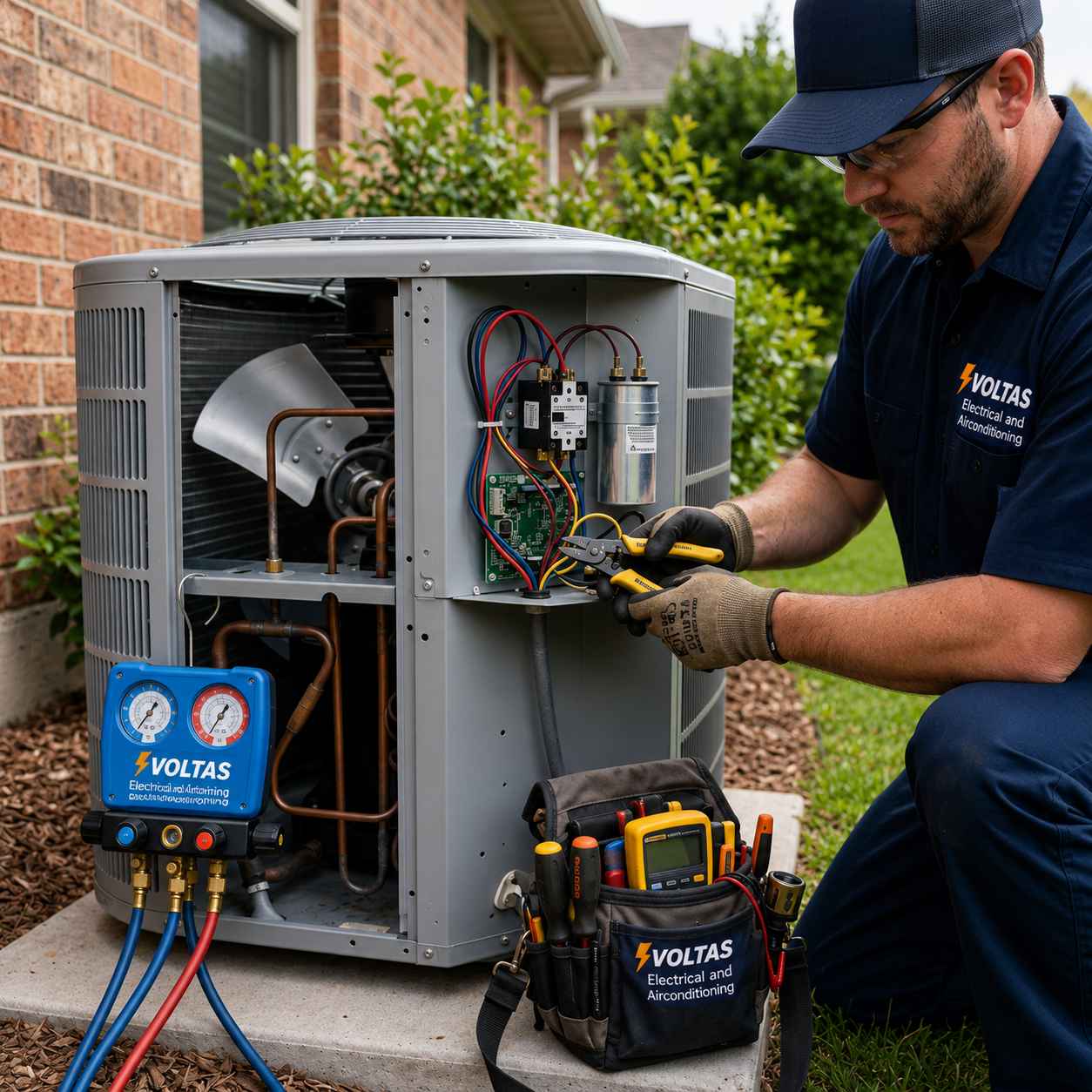
A system doing genuine hard work for weeks each summer — not just the occasional mild afternoon — accumulates dust on coils, low refrigerant from slow leaks, and worn capacitors far faster than the same unit in a temperate climate would. Left unchecked, any one of those turns a manageable summer into an emergency repair call on the exact day you can least afford it. Regular air conditioning maintenance — a coil clean, refrigerant check, filter service, and electrical inspection before the heat sets in each spring — is genuinely cheaper than a breakdown mid-heatwave, both in dollars and in comfort.
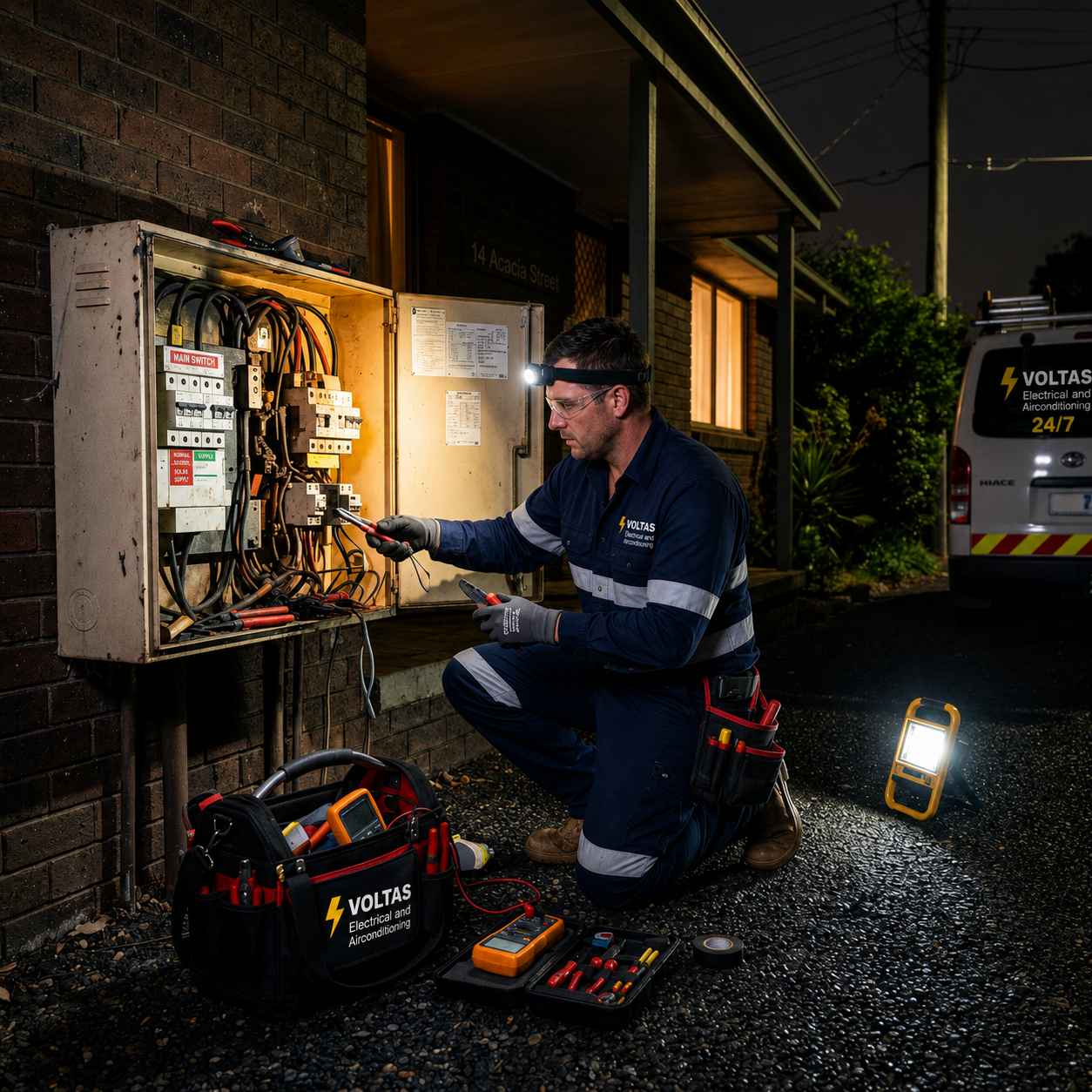
When something does go wrong, response time is everything. A blower motor failure or refrigerant leak on a 25°C day is an inconvenience; the same fault on a 42°C day with vulnerable family members at home is a real safety issue. That's why Voltas runs a genuine 24/7 emergency response across Adelaide metro, with same-day appointments the norm rather than the exception during summer — our AC repair and service team is set up specifically for the volume spike that hits every year once the mercury climbs.
Choosing a system built for Adelaide's climate, not just any climate
Not every air conditioner sold in Australia is genuinely suited to Adelaide's combination of high summer extremes and hot, dry inland-influenced heat. We install and service the full range of major brands — Daikin, Mitsubishi Electric, Mitsubishi Heavy Industries, Panasonic, Fujitsu General, LG, Samsung, Toshiba, Hitachi, Haier, Gree, Midea, Carrier, York, ActronAir, Temperzone, Braemar, Rinnai, Kelvinator, and TCL — see our full brands we service page for details on each. For a whole-house approach in an older Adelaide home carrying heat all day, a properly designed ducted system is often the better long-term answer than several mismatched split systems; our ducted air conditioning guide for Adelaide walks through when that makes sense. And if you're weighing up newer technology altogether, our article on where air conditioning technology is heading covers the efficiency and rebate changes worth knowing about before your next upgrade.
Frequently Asked Questions
How many days a year does Adelaide go above 40°C?
Bureau of Meteorology records show Adelaide averages around 2 to 3 days a year above 40°C, on top of many more days in the high 30s. Adelaide also holds the Australian capital city record for the longest heatwave, with 15 consecutive days at or above 35°C during March 2008, and recorded its hottest temperature ever, 47.7°C, on 24 January 2019.
Why do older Adelaide homes struggle to stay cool in summer?
Many established Adelaide suburbs are full of houses built in the 1960s to 1980s with brick veneer construction, minimal roof insulation, and small or no eaves, which absorb and hold heat far more than modern builds. These homes are often also paired with an undersized or ageing air conditioner installed decades ago, so the unit is fighting a losing battle against the heat load the house lets in.
How do I know if my air conditioner is the right size for my Adelaide home?
The right size depends on room and window area, ceiling height, insulation, orientation, and how many rooms need cooling at once, not just the size of the room on paper. A licensed technician calculates the actual cooling load in kilowatts for your specific home; an undersized system will run constantly on a 40°C day without reaching temperature, while an oversized one short-cycles and wastes energy.
What should I do if my air conditioner fails during an Adelaide heatwave?
Turn the unit off at the switch if it's making unusual noises, tripping the breaker, or smells hot, then call a licensed technician rather than continuing to run it. Voltas Electrical & Airconditioning offers 24/7 emergency response across Adelaide, including during heatwave conditions when demand for repairs is highest.
Don't wait for the next heatwave to find out your system can't cope
Get a same-day, obligation-free assessment from a licensed Adelaide technician before summer pushes your system to its limit.
Sources referenced include the Bureau of Meteorology's climate statistics and current/historical seasonal summaries for Adelaide (bom.gov.au).
Disclaimer: This article is provided as general information and guidance only. It draws on publicly available sources, government and industry publications (referenced where relevant), and Voltas Electrical Adelaide's own trade experience — it is not personalised advice for your specific property and does not replace a licensed, on-site assessment. Regulations, pricing, and product or brand details can change over time, so please independently verify anything relevant to your decision and seek your own professional advice before acting. To the fullest extent permitted by law, Voltas Electrical Adelaide accepts no responsibility or liability for any loss, damage, or other outcome arising from reliance on the information in this article. Where this article refers to a same-day or obligation-free quote or assessment, that refers to the quote or assessment itself — a site visit to a property well outside our normal Adelaide metro service area may incur a travel or call-out fee, as set out in our Terms & Conditions, which also has full details on the points above.